
Some materials quietly return to architecture after being rediscovered by designers, I previously wrote several articles about Glass bricks, which many of us quickly ripped out of our bathrooms during a renovation. But last year at Isola Design I already spotted a newer version in ochre and blue, and during Dutch Design Week last year, a beautiful black and pink glass brick combined with black wood. And maybe you remember my article about the Parisian apartment: Get inspired by the use of reeded glass bricks in this Parisian apartment
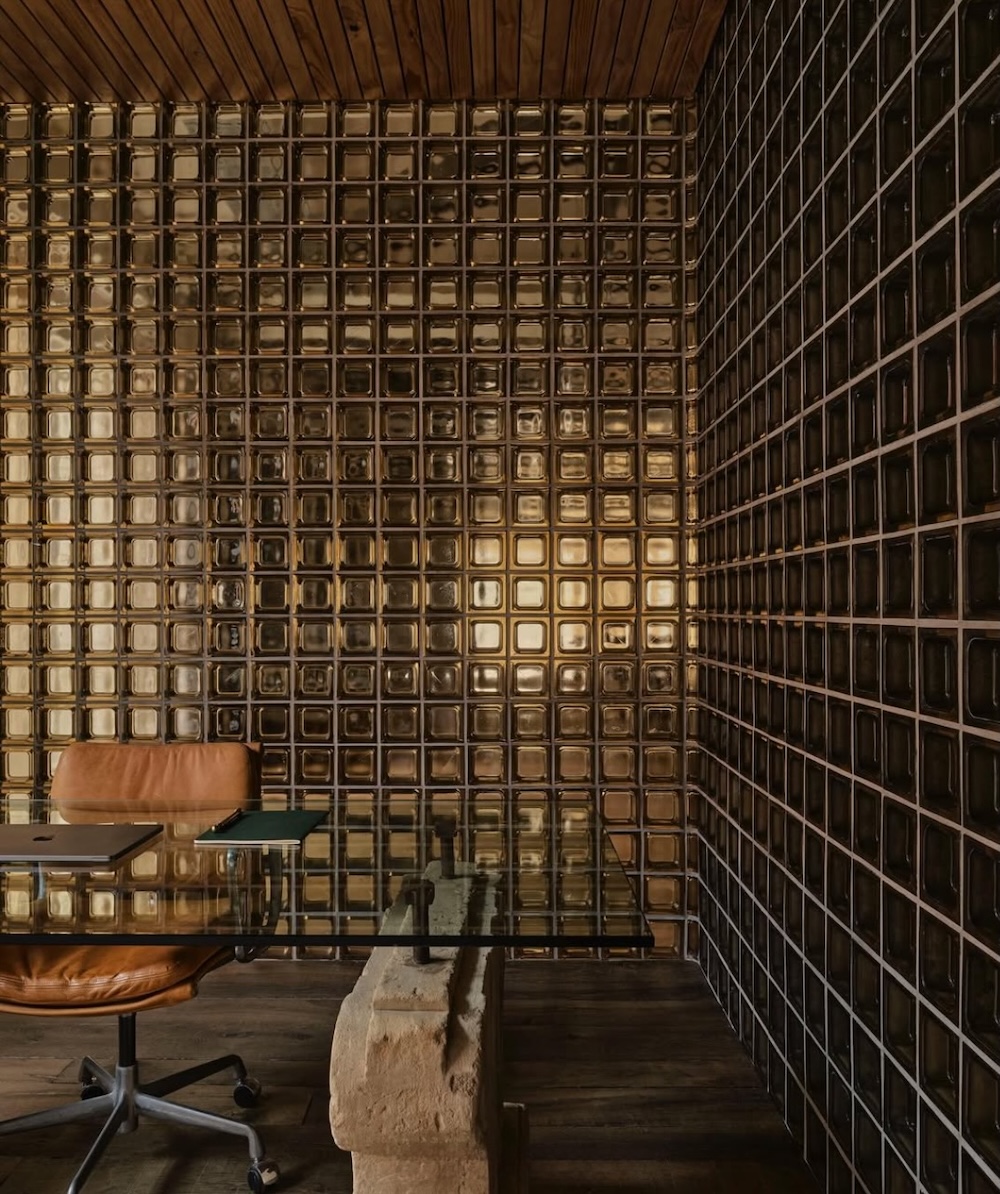
During Milan Design week last year I visited the opening party of Open House in collaboration with Mango Home and several designers. I remember falling in love with the stools in Vetra Mano Glass Blocks by Tom Fereday. Have a look here: Openhouse launches issue 23 at Cadogan gallery | Milan Design week 2025 It was great to see Tom Fereday, a designer I have been following for a while, posting about how he alongside long term collaborators Eco Outdoor worked on their new Sydney studio featuring Mano glass blocks paired with his Arc chair and bespoke Louis tables and audio cabinet.
Mano Bricks
Developed through a collaboration that started through Eco Outdoor and Australian industrial designer Tom Fereday The project brings together Eco Outdoor’s focus on natural materials with Fereday’s interest in simple forms and honest production processes. Tom has been experimenting with cast glass, while Eco Outdoor has long focused on natural materials used in architecture and landscape design. Together they explored how glass could be transformed into a structural element that allows light to pass through while maintaining the solidity of a wall.
The result is the Mano brick, a cast glass block produced individually by hand using recycled glass combined with natural materials such as quartz sand. Suitable for both interior and exterior use. During the casting process small variations appear naturally in the material. Tiny bubbles, soft textures and slight irregularities remain visible, giving each brick its own character and highlighting the artisanal production process.
The proportions of the brick refer to the elongated format of traditional Roman bricks. This longer shape reduces the number of joints when building a wall, allowing larger surfaces of glass to become visible. As light moves through the textured glass, the surface creates subtle reflections and shifting patterns of light and shadow. The system includes both linear and curved bricks, allowing architects to create different compositions.
Images courtesy Tom Fereday – Eco Outdoor
Vosgesparis is an independent Interior & Design magazine, curated editorially and read internationally.
For features, brand collaborations or sponsored projects, see how to work with Vosgesparis
Het bericht Mano Glass Bricks by Eco Outdoor and Tom Fereday verscheen eerst op vosgesparis.