

Most people hang curtains high and wide and stop there: this one overlooked step changes everything
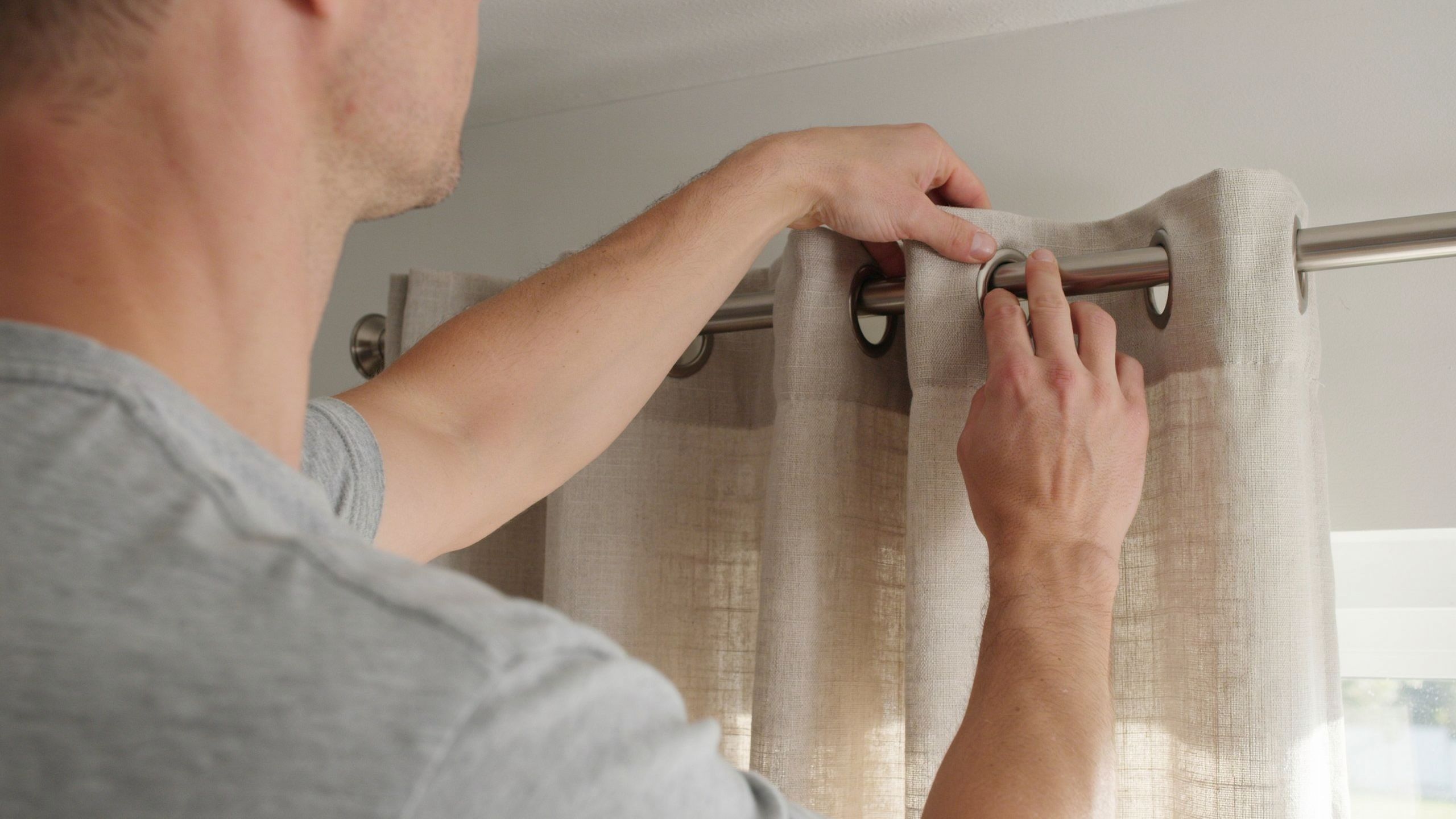
You did what every design account told you to do. You hung the rod a few inches above the window, ran it a little past each side, and let the panels fall to the floor. The room’s supposed to look taller, wider, more expensive. And it does, kind of. But something’s still off, and you can’t quite put your finger on it.
Try this right now. Pull your curtains all the way open and really look at the window. You’ll probably notice the bunched fabric on each end is still sitting on the glass, not on the wall next to it. That’s daylight you’re paying for, and it’s getting blocked, every day, on every window in your house.
You didn’t do anything wrong. You followed the rule. The rule just left out one number.
The advice everyone repeats leaves out the one thing that matters
“Hang high and wide” is the two-line rule you’ll see on every design blog, every home account, every Pinterest board. It’s not wrong. It’s just incomplete.
Fabric Resource, a drapery industry site, tells readers to mount the rod 4 to 6 inches (10 to 15 cm) above the window and to extend it 6 to 12 inches (15 to 30 cm) past the frame on each side. Curtarra’s hanging guide says almost exactly the same thing.
The problem is those “6 to 12 inches” are a guess, not math. That range works okay for a light, thin panel and fails badly for a heavier one. Nobody tells you which end of the range you’re supposed to pick, or why. So most people split the difference, extend the rod about 6 inches (15 cm) past the window, and call it done.
That’s the mistake, and it’s costing you light on every window you own.
Why the same curtains look expensive in one house and cheap in the next
Here is what nobody tells you. When you pull a curtain panel open, the fabric doesn’t disappear. It bunches. And that bunch takes up real horizontal space, sometimes a lot of it.
A standard 50-inch (127 cm) curtain panel, gathered at one end of the rod, takes up roughly 10 to 18 inches (25 to 45 cm) of horizontal space. That’s according to Loft Curtains’ industry calculator. Two panels, one on each side of the window, and you’re looking at anywhere from 20 to 36 inches (50 to 90 cm) of fabric that has to go somewhere when the curtains are “open.”
If your rod only sticks out 6 inches (15 cm) past the window on each side, that fabric has nowhere to go except onto the glass. Your window isn’t actually open. It just looks like it is because the panels aren’t in the middle anymore.
That’s why two people can hang the same panels, at the same height, in the same kind of room, and one looks like a magazine and the other looks like a rental. The magazine version gave the fabric somewhere to land besides the window.
It gets worse the heavier your curtains are. Weekand’s home guide breaks it down: light unlined panels eat about 10 percent of your window width, lined panels eat 15 percent, blackout panels eat 20 percent, and thick velvet or chenille adds another 5 percent on top of that. In plain terms, the heavier and cozier your curtains are, the more window they’ll steal when they’re open, unless the rod is long enough to hold all that bunched fabric out of the way.
That’s the real reason your room still doesn’t feel bright or expensive after you did everything right. It’s not the panels. It’s not the height. The rod is too short for the fabric you own, and every inch of glass those bunched panels are covering is an inch of daylight your room isn’t getting. Multiply that by every window in the house and you can see why the whole place feels a little dim, a little narrow, a little less finished than it should.
So how long does the rod actually need to be? Nobody who repeats “hang high and wide” seems to answer that. But the drapery trade has a specific number, and it’s easy to remember.
The number that fixes it
Once you know it, you’ll wonder why nobody says it out loud. Add roughly one-third of your panel width to each side of your window opening. That’s the rod length you need.
For a 60-inch (152 cm) window with two 50-inch (127 cm) panels, that means 60 plus about 16 (40 cm) on each side, or a rod running roughly 92 inches (234 cm) total. For thin sheers, you can go a little shorter, closer to a quarter of the panel width per side. For heavy lined or blackout panels, stay at a full third or slightly more.
Do this and the panels stack fully onto the wall when open. The glass reads clear end to end. The window looks a full foot (30 cm) wider than it actually is, and the room jumps a brightness level with the exact same curtains you already own.
There’s one more thing to watch. If your panels are barely wider than your rod, they’ll hang flat and refuse to bunch tight when open, which means they’ll cover even more glass. Industry sources say your total fabric width should be about 2 to 2.5 times your rod width, so the panels have something to gather into. Cheap store panels are usually fine here. It’s the custom-cut ones people get wrong.
Do this today
Measure your window opening, trim included, and write it down.
Measure one of your existing panels flat. If it’s 50 inches (127 cm), plan on about 16 inches (40 cm) of rod extension on each side. If it’s 40 inches (100 cm), plan on about 13 (33 cm). If it’s 60 (152 cm), plan on about 20 (50 cm).
Add both extensions to your window width. That’s the rod length to buy.
Grab an adjustable rod in that range. A basic 72-to-144-inch (183-to-366 cm) adjustable rod runs about $25 to $45 (roughly €23 to €42) at Home Depot, Lowe’s, or Target.
Reinstall at the same height you already had, just wider. Fifteen minutes with a drill and two new bracket holes on each side.
Pull the panels fully open and check. The glass should show all the way across.
That’s it. No new curtains, no new fabric, no contractor, no repainting.
Sources: (1) Fabric Resource, How High To Hang Curtains; (2) Curtarra, How to Hang Curtains; (3) Loft Curtains, Curtain Calculator; (4) Direct Fabrics, Understanding Curtain Stacking; (5) Weekand, How to Calculate the Stack Back of Curtains.
The post Most people hang curtains high and wide and stop there: this one overlooked step changes everything appeared first on Trendir.