

Before you buy another pack of LED bulbs, check one detail almost no one checks
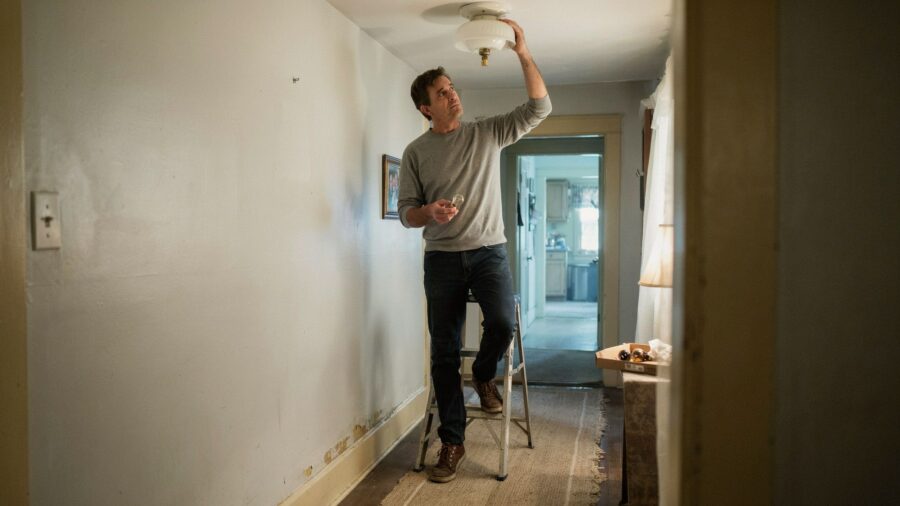
You bought the “lasts 22 years” LED bulbs. You screwed them in. And now, somehow, you’re back on the ladder again. Same bulb, same spot, dead in under a year.
If this keeps happening to you in the same places (the hallway ceiling light, the bathroom vanity, the porch lantern, that light over the stairs), you probably blame the brand. Or the wiring. Or bad luck.
It’s almost never any of those things.
There’s one line of tiny print on the back of the box that decides whether that bulb will actually last as long as promised, or die so fast it feels like a scam. Most people never look for it. A lot of folks don’t even know it’s there.
And it costs the bulb makers about $2 more (roughly €1.90) to add.
It’s not the bulb. It’s not the wiring. It’s not you.
The frustrating part is that you’re doing everything right on your end.
You buy the good bulbs. You match the wattage. You don’t leave them on 24/7. You even bought the fancy “warm white” ones because the packaging looked like it knew what it was doing.
And still, the same three or four spots in your house eat bulbs like popcorn.
Now think about the spots in your house that keep eating bulbs. Really picture them. It’s probably not the lamp in the living room. It’s not the ceiling fan. It’s not the bare bulb over the laundry sink.
It’s usually the same three or four spots. The ceiling dome in the hallway. The porch light. The bathroom vanity. The recessed lights in the kitchen ceiling.
Notice a pattern?
It’s not random. Those spots share one thing in common, and that shared thing is quietly wrecking every regular LED bulb you put into them.
Meanwhile, the bulbs in your open-air spots (lamps, ceiling fans, that bare fixture in the garage) are lasting for years. Same brand. Same box. Same “22-year lifespan” claim on the label. Different fate.
If you’ve felt like you’re the only one this happens to, you’re not. It’s one of the most common complaints in home Facebook groups and hardware store forums, right up there with dying dishwashers and mystery HVAC noises. And the answers online are usually wrong. People blame cheap brands. They blame their electrician. They blame Chinese manufacturing. They swap one brand for another and get the same result six months later.
The real reason has almost nothing to do with the brand. It comes down to how modern LED bulbs are built on the inside, and how that clashes with certain spots in a normal American home. Once you see it, you can’t un-see it. And the fix takes about $5 (roughly €4.70) and two minutes.
This is what most people picture when they think of the trouble spots:
A ceiling dome. A porch lantern. A bathroom globe. A recessed can with no vents.
Those spots have a technical name. The industry calls them fully enclosed fixtures. ENERGY STAR, the government energy program, draws a hard line for what counts: if the vent openings around the bulb add up to less than 3 square inches (about 20 square centimeters, or smaller than a business card), that fixture is officially “enclosed.” No airflow. No way for heat to escape.
And that word “heat” is the whole story.
Modern LED bulbs are basically small pieces of electronics. The glowing top stays cool, sure. But down in the base (the fat plastic-and-metal chunk that screws into the socket) there’s a small chip called a driver. Its job is to turn your wall power into the exact kind of power the LED needs. And it runs hot. Not “warm on the outside” hot, but hot on the inside where you can’t feel it.
In an open fixture like a lamp or a ceiling fan, that heat drifts away into the air and the driver stays fine. In a sealed dome or lantern, it has nowhere to go. So it sits there, wrapped around the base of the bulb, slowly cooking the driver from the inside.
The U.S. Department of Energy puts it plainly: LED bulbs need their heat to escape to last as long as promised. When they can’t, the driver dies. The bulb dims, flickers, or quits months into what should have been a 20-year lifespan.
A regular LED bulb in your sealed hallway dome isn’t broken. It’s just being slow-cooked in an oven it was never built for.
But some LED bulbs are built for the oven. Most aren’t. And the way you can tell the difference is right there on the box.
The four words on the box that fix it
Grab any LED bulb box. Flip it over. Look at the small print on the back near the wattage.
You’re looking for a short phrase, printed small. It reads one of these ways:
“Suitable for enclosed fixtures”
“Enclosed fixture rated”
“For use in fully enclosed luminaires” (a fancy word for fixtures)
That’s it. That’s the line.
If the box says any of these, the bulb is built for the oven. It has a tougher driver, better internal parts, and often a small metal piece in the base that pulls heat away from the electronics. Put it in your sealed hallway dome and it’ll actually last.
If the box says nothing about enclosed fixtures, or worse, says “not for use in fully enclosed fixtures,” that bulb is only meant for open spots like table lamps, ceiling fans with exposed bulbs, or bare-socket pendants. Put it in your bathroom dome and it will fail early. Every time.
Consumer Reports actually tests bulbs for this specifically, and lists it right next to brightness and dimming ability on their ratings. It matters that much.
Now for the fix, step by step:
Walk around and note the trouble spots. Any covered ceiling light, glass dome, outdoor lantern, or vented-less recessed can that keeps eating bulbs. That’s your list.
Only replace bulbs in those spots. Regular LEDs are fine in lamps, ceiling fans, and anywhere the bulb has open air around it. You don’t need to change those.
Buy enclosed-rated bulbs for the trouble spots. Expect to pay about $5 to $8 per bulb (roughly €5 to €7.50) at Home Depot, Lowe’s, or Amazon. Philips, GE, Cree, Feit, and Luxrite all make them. That’s a few dollars more than the cheapest option, and that’s the whole cost of the fix.
Swap them in. Two minutes each. No tools. No electrician.
Do this once, and those bulbs should last for years (up to 20 or so with normal use) instead of a few months.
Sources: (1) U.S. Department of Energy, “Purchasing Energy-Efficient Light Bulbs”; (2) ENERGY STAR Program Requirements for Luminaires; (3) Consumer Reports, “Best Lightbulb Buying Guide”; (4) Consumer Reports, “How to Buy the Right LED”; (5) Northwest Rural Electric Cooperative, “Ask an Expert: LEDs in Enclosed Fixtures”.
The post Before you buy another pack of LED bulbs, check one detail almost no one checks appeared first on Trendir.