

27 Bedroom Rug Placement Ideas That Make You Realize Placement Was Always More Important Than the Rug Itself
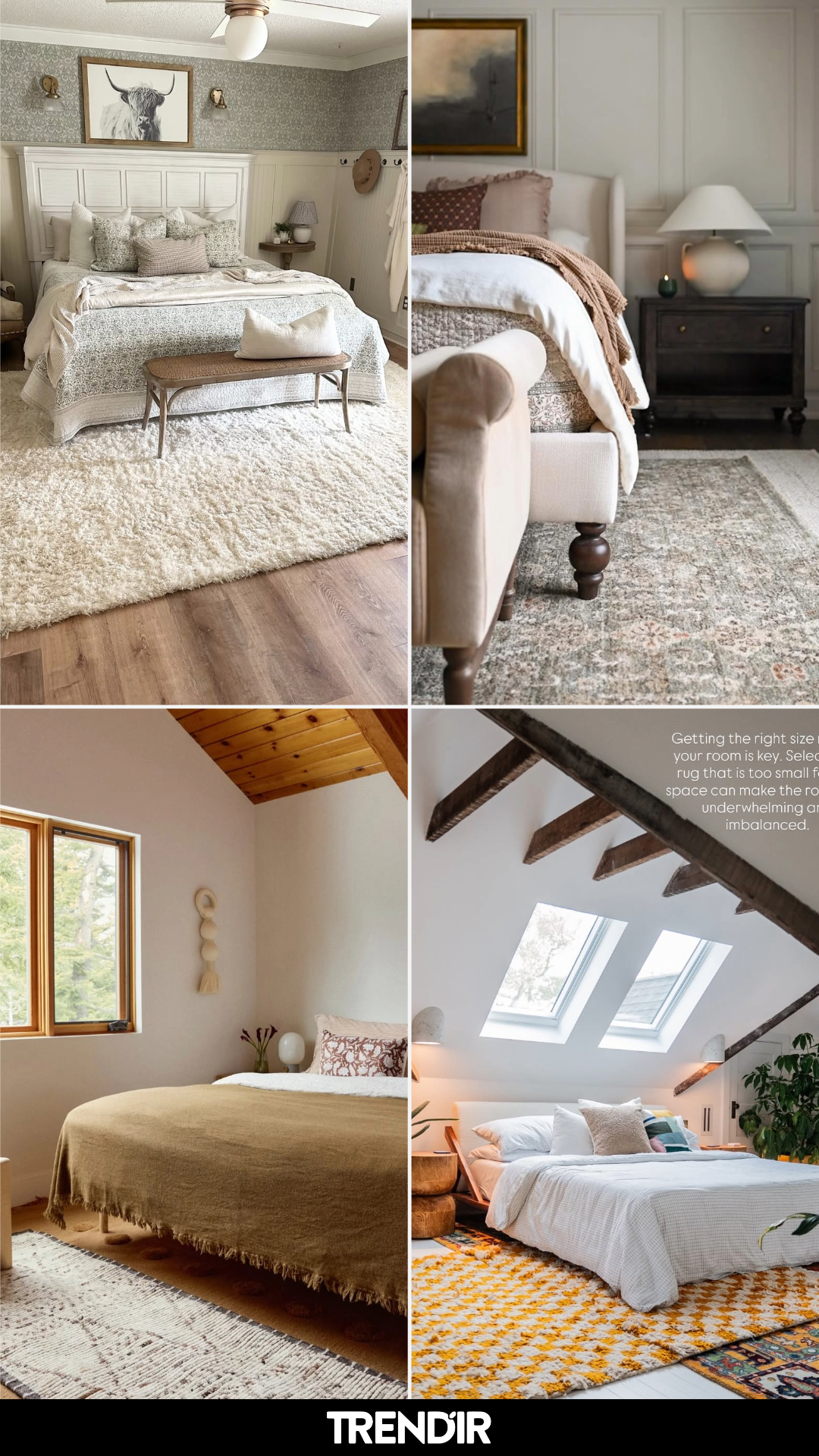
Where a rug lands says more about a bedroom than the bed itself. Slide it under the bottom third, float it sideways past the nightstands, layer two and let the smaller one carry the pattern — every choice rewrites the way the floor reads. These 27 bedroom rug placement ideas pull from real rooms where the rug isn’t an afterthought tucked under the bed. It’s the move that makes everything else feel composed.
27 Bedroom Rug Placement Ideas That Quietly Anchor Every Other Decision in the Room
Placement is the part most people get wrong before they ever pick a pattern. Slide it too far under and the rug disappears. Float it too far out and the bed looks unmoored. The sweet spot lives somewhere in between, where the rug catches the foot of the bed, runs past the nightstands, and gives the floor a frame to live inside.
The rooms below cover every layout question worth asking. Under-the-bed full coverage, sideways runners, partial slides, layered pairings, full wall-to-wall softness. Pick the one that matches your floor plan and the rest of the room starts falling into place on its own.
1. Two-Thirds Slide
Tucked under the bottom two thirds of the bed, with the woven Berber-style rug extending past the footboard onto warm wood floors. The cream linen quilt and charcoal pillow stack get a textural counterweight from the dark diamond pattern underfoot, while the rug’s extra length gives the foot of the bed a soft landing zone. Ideal for rooms where you want the rug to feel like part of the bed’s footprint without swallowing the floor entirely.
2. Statement Rug, Sideways
A bold tribal-patterned rug runs perpendicular to the bed, claiming the entire walking zone between the platform and the sofa. The terracotta, mustard, and inky black squares pull every other color in the room together, from the moss throw to the warm walnut bed frame. Best for compact bedrooms where the rug doubles as a divider, marking the lounging side without needing a wall to do it.
3. Floating Centerpiece
Centered in the room with deliberate floor showing on all sides, this graphic black-and-tan rug treats herringbone parquet like a frame. The bed sits just beyond its edge rather than on top of it, which lets the pattern read in full and turns the rug into something closer to a low art piece. Works in larger bedrooms where the floor itself is beautiful enough to be part of the composition. The muted tone bedroom roundup leans into the same restraint.
4. Tucked Fully Under
The rug sits almost entirely beneath the king bed, with just a sliver showing on the sides and at the foot. With a large statement headboard and a dense pillow stack already doing the visual work, the rug stays in a supporting role, adding softness without competing for attention. Right for hotel-style bedrooms where the bed needs to remain the unquestioned focal point.
5. Wall-to-Wall Layer
A patterned Moroccan-style rug stretches across most of the floor, with a second jute layer peeking out underneath near the window. The double layering gives the room a barefoot, cottage-soft quality that single rugs rarely manage. Perfect for boho-leaning bedrooms where the goal is to make every step feel cushioned, not just the ones beside the bed.
6. Wall-to-Wall Plush
Full-coverage shag in warm cream, treated almost like carpeting that happens to be a rug. The depth of the pile reads as luxury more than texture, soaking up the lamplight and making the bed feel like it’s floating on a cloud. Suited to primary bedrooms where the goal is straightforward sensory comfort, the kind that makes cozy bedroom layouts feel like a quiet escape.
7. Wider Than the Bed
A vintage-style faded rug extends well past both sides of the bed, swallowing most of the floor in soft ink-and-cream pattern. The size lets the rug do the work of grounding the entire room rather than just the sleeping area, which matters in a space where the rest of the styling stays quiet. Best when you want the rug itself to be the loudest pattern in the room.
8. Bench-Length Frame
The rug sits beneath the bottom half of the bed and stretches forward to fully contain the upholstered bench at the foot. The vintage blush pattern softens the dark moody board-and-batten wall, and the bench grounded inside the rug zone makes the foot of the bed read as its own composed vignette. Ideal for bedrooms with a bench or ottoman that needs to feel anchored rather than floating.
9. Edge-Catching Placement
Just the front edge of the bed touches the rug, with most of the patterned floral piece extending out into the room. The blue-green Persian pattern picks up the curtain trim and the bench velvet, turning the rug into the room’s color anchor rather than its soft underbelly. Works in symmetrical bedrooms where the visual weight needs to live at the foot of the bed.
10. Layered Stripes Underfoot
A bright striped flatweave covers most of the floor, with a four-poster bed sitting on it rather than just touching its edge. The horizontal stripes pull the eye across the room toward the windows, which makes the ceiling feel taller and the floor feel longer. A great move for kids’ rooms or guest spaces where pattern is the personality and the rug gets to set the whole tone.
11. Traditional Persian Anchor
A faded Persian rug stretches well past the bed on every side, swallowing most of the dark wood floor in soft ochre and cream pattern. The scale lets the entire room read as one composed scene, with the upholstered bed, bench, and antique armoire all sharing the same grounded base. Best for primary suites with vaulted ceilings, where a smaller rug would look swallowed by the architecture.
12. Plush Pile, Pulled Forward
The cream shag sits well in front of the bed, with just the bottom edge of the bed frame catching the rug’s far end. Pulling it forward gives the bench at the foot of the bed a soft frame and creates a clear lounging zone that doesn’t require extra furniture. A smart move for cozy bedroom layouts where the floor itself needs to feel like an invitation.
13. Tonal Sisal Underfoot
A pale woven sisal runs wall to wall under twin beds, treated almost like soft carpeting that catches the striped wallpaper’s chalky blue. The neutral weave keeps the sage bedding and bobbin frames as the visual leads, while the texture grounds the whole room without adding pattern. Ideal for shared kids’ rooms or guest spaces where two beds need to feel like one cohesive setup.
14. Textured Runner Slide
A flatweave runner sits perpendicular to the bed, extending past the nightstand and along the walking path beside the headboard. The narrow shape keeps the floor mostly visible while still softening the route from doorway to bed. Right for tighter primary bedrooms where a full rug would crowd the room but the floor still needs a soft landing.
15. Vintage Layered Over Carpet
A worn Persian in rust and ink lies directly on top of plush wall-to-wall carpet, half tucked under the bed and half spilling out into the room. The layered approach adds pattern and history to a carpeted bedroom without requiring a full remodel. A renter-friendly trick worth borrowing for any muted tone bedroom that needs a bit more character underfoot.
16. Faded Loomed Beside
The rug sits entirely to the side of the bed, catching the foot of an upholstered bench and stretching toward the nightstand. Pulling the rug out from under the bed entirely keeps the wood floor visible as a frame and gives the bench-and-nightstand zone its own composed footprint. Works in bedrooms where the bed is pushed close to a wall and a full under-bed rug would feel forced.
17. Striped Grounding
A subtle striped rug runs the full length of the bed and extends out past the foot, catching the dusty pink palette of the room without competing with the wallpapered built-ins. The orientation pulls the eye toward the windows, lengthening the perceived footprint of the room. Ideal for kids’ or guest bedrooms where pattern needs to feel quiet enough to live with for years.
18. Quiet Distressed Edge
A soft sage-and-cream antique rug sits beneath the bench at the foot of the bed, with just enough showing beyond it to anchor the nightstand. The aged pattern adds depth to the otherwise quiet panelled walls and creamy bedding. Best for soft reset bedrooms where the rug is meant to whisper rather than announce itself.
19. Oversized Tonal Sweep
A large cream antique rug runs wall to wall, stretching well beyond the bed, the bench, and the nightstands. The neutral palette lets the patterned headboard and bench take the lead while the rug acts as a unifying base. Right for larger primary bedrooms where the rug needs to make every piece of furniture feel like part of one composed whole.
20. Tucked Beside a Platform Bed
A small geometric rug sits to the side of a built-in storage platform bed, marking the desk-and-window zone rather than the sleep zone. The placement turns the rug into a divider for a small bedroom that does triple duty as workspace, lounge, and bedroom. A clever move for studios or compact rooms where the bed already sits flush against a wall.
21. Chunky Knit Texture
A heavily textured ribbed rug sits forward of the bed, catching just the front legs and stretching out into the room. The corduroy-like weave reads as quiet luxury underfoot, picking up the warm walnut nightstands without competing with the rust velvet pillows. Best for minimal bedrooms where texture has to do all the work pattern usually does.
22. Layered Vintage Stack
Two rugs stacked beneath the bed, a checkered Beni Ourain over a colorful Persian, with the layered edges fanning out into the room. The double-rug approach turns the foot of the bed into a soft, plant-filled landing pad that feels collected rather than designed. Right for attic bedrooms or rooms with quirky angles where one rug alone never quite fills the space. The rustic bedroom roundup leans into the same lived-in layering.
23. Foot-of-Bed Frame
A pale striped flatweave sits entirely beyond the foot of the bed, framing the floor between the bed and the window rather than tucking under the mattress. The placement makes the rug feel like a landing pad on the way in, with the wood floor still visible around the bed itself. A clean move for guest bedrooms where the rug doubles as the visual cue for stepping into the room.
24. Patchwork Centered
A patchwork rug in rust, ink, and stone sits dead center under the bed and bench, with equal floor showing on every side. The deliberate centering treats the rug like an area rug in a living room, giving the whole sleep zone a defined footprint on top of the herringbone parquet. Ideal for bedrooms where the rug needs to read as deliberate composition, not just a soft layer.
25. Patterned Mat at the Foot
A small textured Berber-style rug tucks beneath a wooden bench at the foot of the bed, far enough away that the bed itself sits directly on the wood floor. Treating the rug as a footstool-zone accent rather than a bed anchor keeps the room feeling open and the floorboards on full display. Works for primary bedrooms with beautiful wood floors that deserve the spotlight.
26. Off-Center Floor Mat
A neutral rug floats centered between the bed and the bench, with the wood floor framing it on all sides. Pulling the rug forward like this lets the canopy bed sit directly on the floor while still giving the foot of the bed a soft anchor. Best when you want the bed to feel architectural and the rug to play a supporting role.
27. Tucked Beside Seating
A small fringed Berber rug sits next to an accent chair, well away from the bed itself. The placement turns the rug into a reading-nook anchor rather than a bed accessory, marking the chair-and-side-table zone as its own little composition. Perfect for guest bedrooms or smaller spaces where the rug doesn’t need to live anywhere near the bed to feel like it belongs.
The post 27 Bedroom Rug Placement Ideas That Make You Realize Placement Was Always More Important Than the Rug Itself appeared first on Trendir.