

Pyrex Changed Its Glass in the U.S. Decades Ago: What That Means for the Dishes in Your Cabinet
© NoDerog
You pull a glass baking dish of leftover lasagna out of the freezer, slide it straight into a hot oven and turn to set the table. A few minutes later there’s a loud crack. When you open the door, the dish has split in two, and dinner is on the oven floor.
This is not your fault. Glass bakeware has a reputation for being tough, and the name Pyrex carries a lot of that trust. But the Pyrex sold in the U.S. today isn’t the same glass that built that reputation. According to the Corning Museum of Glass, tableware sold in the United States under the Pyrex license “is primarily tempered soda-lime today,” not the borosilicate glass the brand was first known for.
What changed, and when
Pyrex is a brand, not a single type of glass. The Corning Museum of Glass says more than 150 glass compositions have been used under the name since 1915. Corning experimented with tempered soda-lime glass for transparent ovenware decades ago, and the museum quotes Herb Dann saying that by the time of the 1998 sale, Corning had mostly switched to tempered soda-lime for almost all of its tableware.
That year, Corning sold its consumer products division. Pyrex remains a Corning trademark, licensed to other companies to make the dishes. Pyrex made under a separate license for overseas markets is still made from tempered borosilicate glass, according to the museum.
The difference matters in the kitchen. Iowa State University’s AnswerLine explains that tempered soda-lime glass doesn’t handle heat as well as borosilicate glass, though it is more durable when dropped. Sudden temperature swings, called thermal shock, are what crack it.
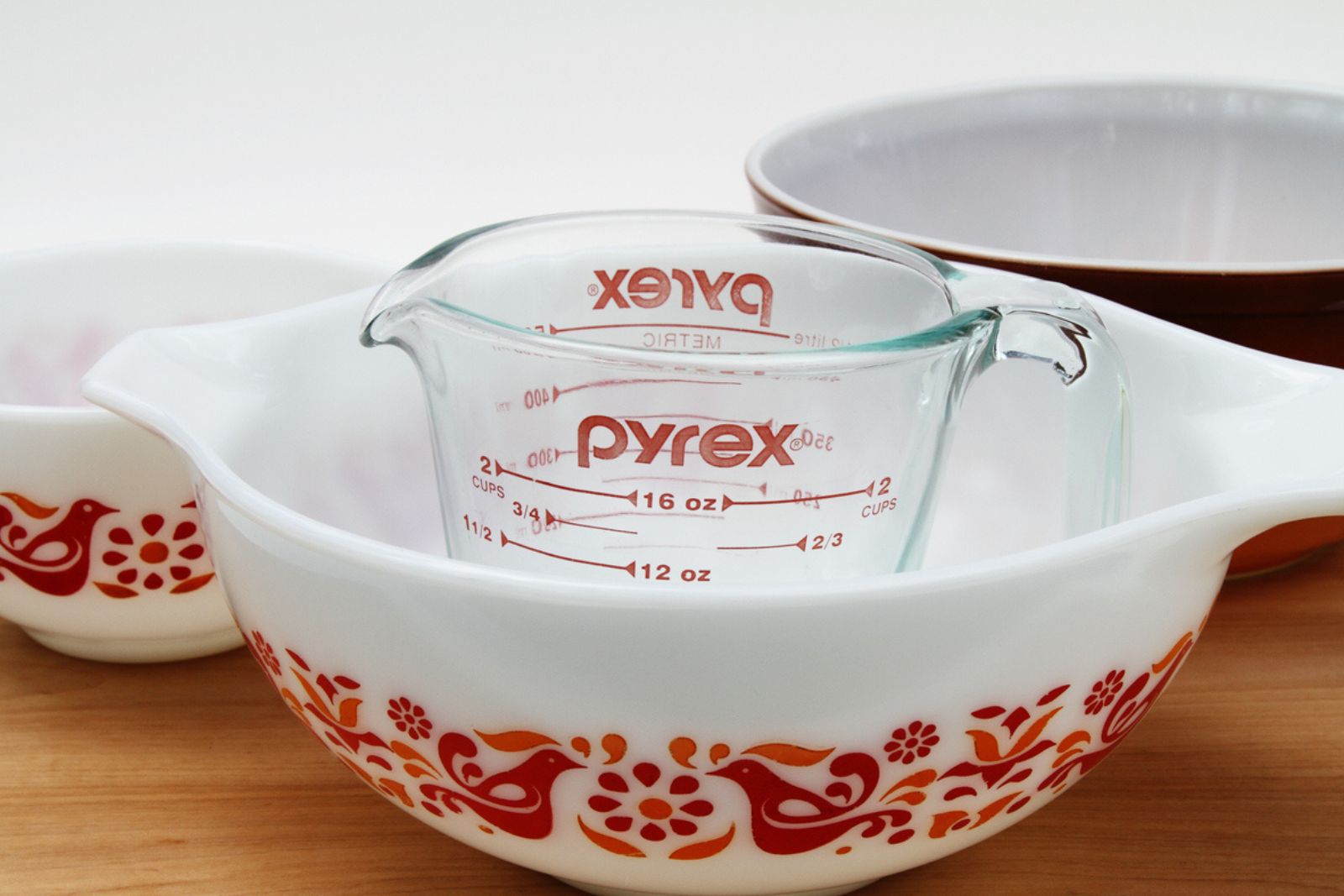
You may have heard that the logo tells you which glass you have: all caps for old borosilicate, lowercase for newer soda-lime. The museum says the switch to the lowercase logo was a rebranding in the late 1970s, and that it “is not a conclusive way to determine, historically, what type of glass formulation the product is made from.”
The rules that keep a glass dish in one piece
Whatever is in your cabinet, the safest approach is to follow the current Pyrex safety and usage instructions:
No freezer to hot oven. Don’t transfer a dish directly from the freezer to a hot oven.
Preheat first. Put the dish in only after the oven has reached temperature.
No direct heat. Never use it on a stovetop, under a broiler, on a grill or in a toaster oven.
No liquid in a hot dish. Don’t add liquid to hot glassware. Instead, add a little liquid to cover the bottom of the dish before cooking.
No wet or cold landing spots. Don’t set a hot dish on a wet or cool surface, directly on a countertop or metal surface, or in the sink. Iowa State recommends a dry cloth potholder or towel.
Use dry potholders. Pyrex warns against handling hot glass with a wet towel or wet potholder.
If the old dishes in your cabinet have earned a place on display, they can fit right into the warm, pottery-filled look of these earthy kitchen ideas.
When to retire a dish
Pyrex says not to use or repair any glassware that is broken, chipped, cracked or severely scratched, and Iowa State advises inspecting dishes and discarding damaged ones.
After receiving 66 complaints over ten years, the U.S. Consumer Product Safety Commission concluded in 2008 that Pyrex glass bakeware does not present a safety concern. But if you want a dish that can handle quick temperature changes, Iowa State notes that some brands, such as OXO, use thermal shock resistant borosilicate glass. Check the label, not the logo.
Thaw first, preheat, keep it off the burner and land it on a dry towel. That’s the trick.
The post Pyrex Changed Its Glass in the U.S. Decades Ago: What That Means for the Dishes in Your Cabinet appeared first on Trendir.