

Skip the Rock Salt: The Cheap Garden Tool That Breaks Up Driveway Ice © Robin Gentry
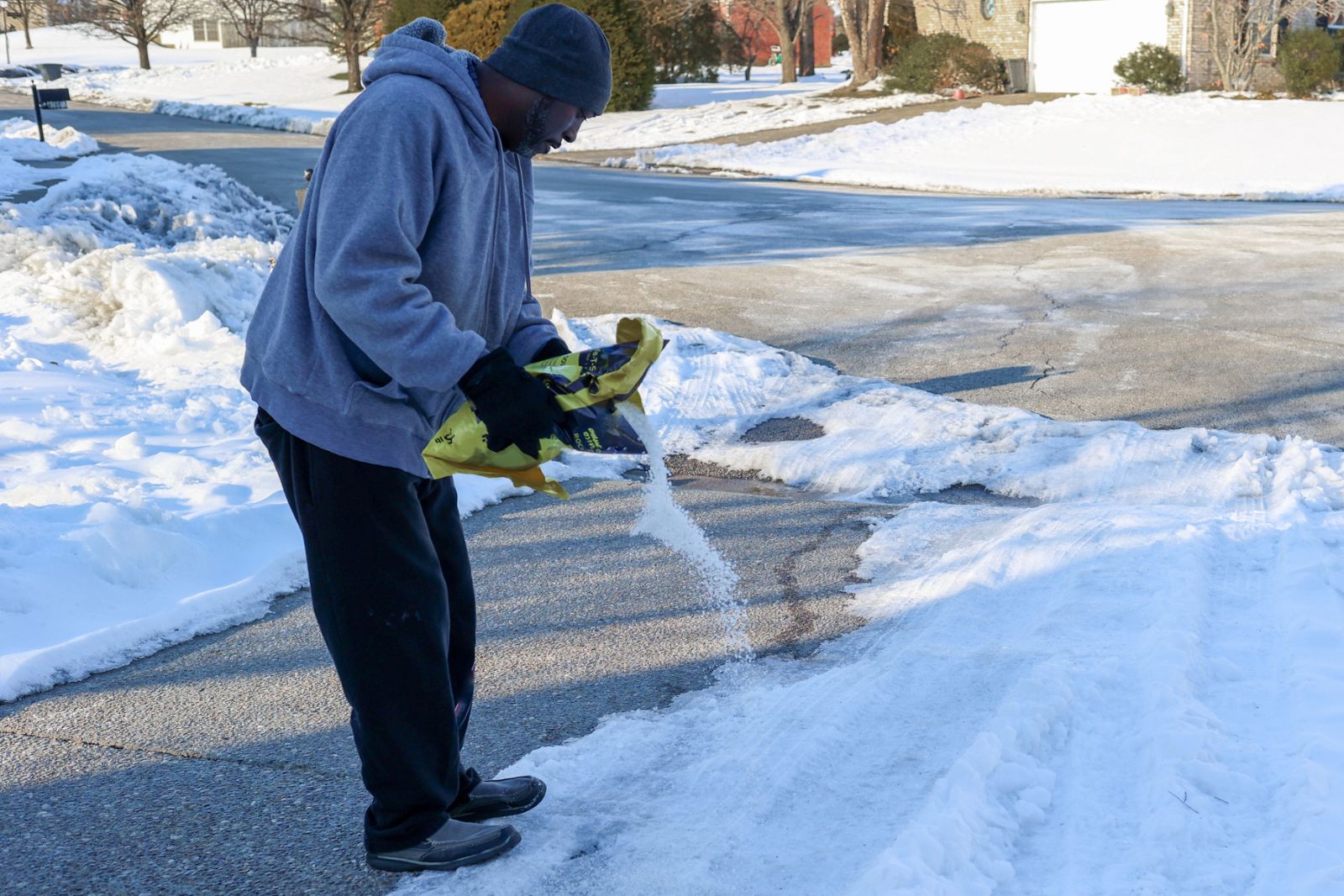
The driveway glazes over overnight, so you shake rock salt across it before work. It does the job. Then spring arrives, and the concrete is flaking near the garage, the shrubs along the edge have brown, burned tips, and the dog has spent the winter licking its paws by the back door.
This is not your fault. Rock salt is what most of us reach for the moment the driveway ices over. But University of Wisconsin-Madison Extension calls it “highly corrosive,” noting that it can damage the environment and corrode vehicles and concrete. And University of Nebraska-Lincoln Extension gives advice that changes how you think about the bag: “Do not use deicers to completely melt snow or ice, but to make their removal easier.” In other words, the real work is mechanical, and a tool you may already have in the shed can do a lot of it: a garden pitchfork. The idea spread online through a video from the woodworking YouTube channel Rob’s Garage Woodworking.
What salt does to concrete, plants and paws
On concrete, the most common winter damage is scaling caused by freeze-thaw cycles, and Nebraska Extension notes that salt crystals forming in the concrete can have a similar effect to freezing water. New concrete is especially vulnerable: the extension recommends letting it air dry for at least 30 days before the first freeze.
Plants take a double hit. Wisconsin Extension explains that salt deposited on plants draws moisture out of their tissues, causing drying and burn, and that sodium in the soil destroys its structure and keeps roots from taking up water. For pets, the ASPCA warns that ice melts can leave sensitive paw pads irritated, cracked or even bleeding, and that licking treated paws can cause stomach upset.
How to break up ice with a pitchfork
Pick the right ice. The trick works best on compacted snow and thick ice, the kind that’s too thick to slide a flat scraper under. A thin, clear glaze bonded to the pavement leaves the tines nothing to grab.
Use a sturdy fork. Thick tines are more durable and can work under and through ice, and a wider head lifts more at once.
Go in low, not down. Slide the tines between the ice and the pavement at a shallow angle, then rock the handle back to pop the ice up in sheets or chunks. Don’t stab straight down: digging too deep can scratch the concrete underneath.
Clear the pieces. Toss the chunks aside, then finish with a snow shovel.
Add traction where you walk. Sand doesn’t melt ice, but Wisconsin Extension notes that it doesn’t harm plants either, though it needs to be reapplied. If you need some melting power, the ASPCA says pet-friendly ice melts typically contain urea or magnesium chloride, and they still call for careful use.
Where the pitchfork falls short
Be realistic: this is a homeowner trick, not a lab-tested method. It won’t touch black ice, and on asphalt, pavers or freshly poured concrete, go gently or skip it. If you do use salt, Wisconsin Extension recommends applying it only after all the snow has been shoveled, keeping it to high-risk spots like steps, and keeping salty snow off the root zones of plants. Mixed with sand, it suggests keeping sodium chloride under 5% of the blend.
Whatever ends up on the driveway also ends up on the floor inside, so the entry deserves some thought in winter, like the checkerboard floor in one of these foyer ideas. Wipe the dog’s paws when you come in, and keep the salt for the steps. Get under the ice, lift, then shovel. That’s the trick.
The post Skip the Rock Salt: The Cheap Garden Tool That Breaks Up Driveway Ice appeared first on Trendir.