

15 Backyard Play Zones That Keep the Fun Without Sacrificing the Look of the Yard
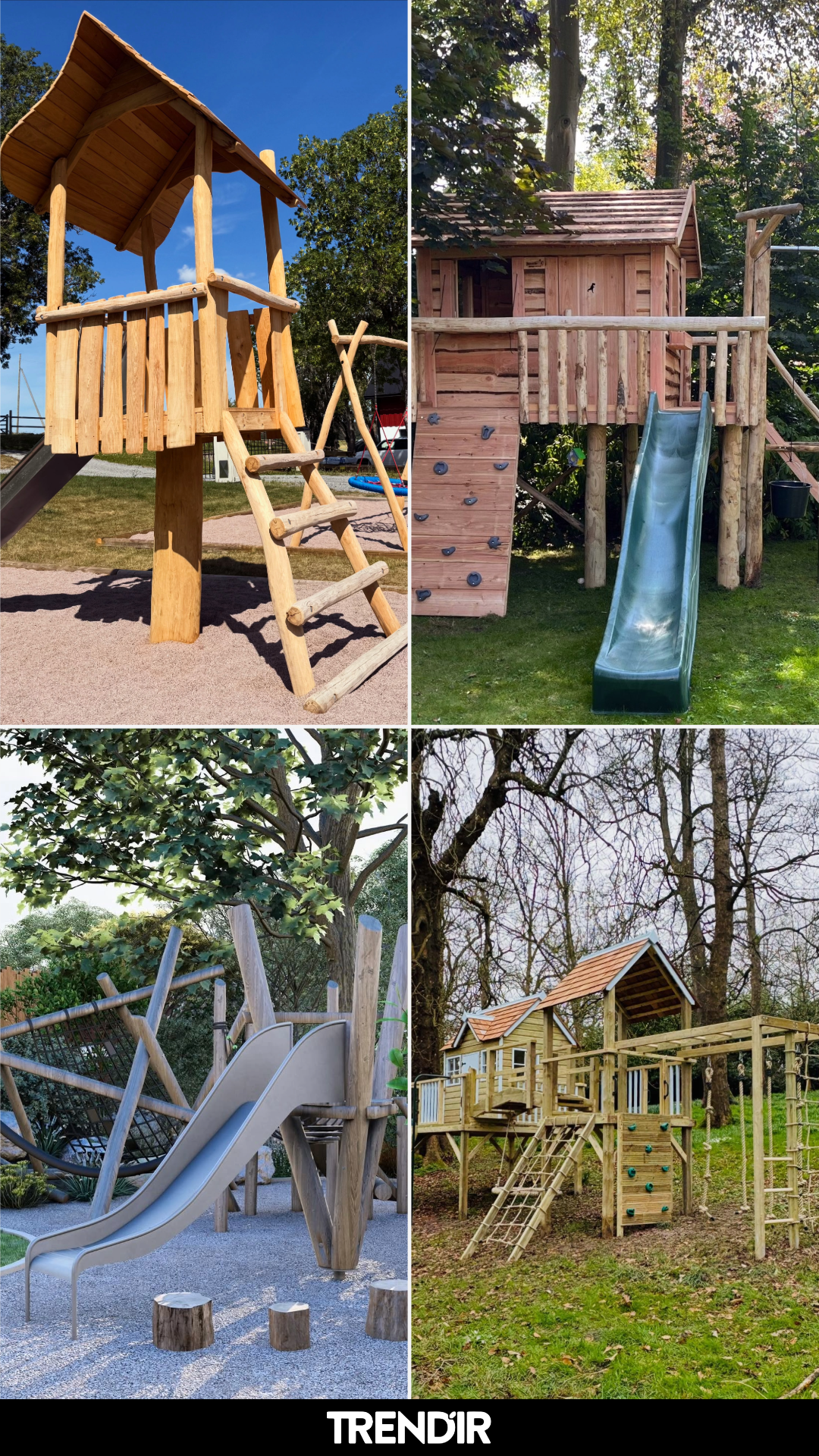
Kids don’t need bright red plastic to have a real backyard. They need something to climb, something to swing on, and dirt under their feet. These15 yards figured out how to give them all of that without the eyesore parked in the middle of the lawn.
15 Backyard Play Zones That Look Like They Belong in the Yard, Not Fighting It
The plastic playset problem is a real one: you buy it for the kids, it takes over the yard for the next eight years, and the whole time you’re staring at a color palette that has nothing to do with your house. The good news is there’s a whole other way to do this that gives the kids more to actually do, not less.
Every yard in this roundup uses wood, rope, sand, stumps, or the trees that were already there. The play still happens. It just doesn’t look like a big-box store dropped a delivery in your grass.
The Play Tower That Ages With the House
Raw pine posts, a shingled roof, a slide off one side and a rope-nest swing off the other. The whole thing reads like a small outbuilding instead of a playset, which is why it works in a yard with a real barn and a real fence behind it. Kids get the tower and the swing bay; you get something that will silver into gray over the years and look better for it, not worse. If you’re rethinking a bigger outdoor plan around a build like this, the landscape designs edit is worth bookmarking.
The One That Looks Like a Real Cottage on Stilts
Two peaked roofs with clay-colored shingles, a proper railed deck between them, and a full monkey bar rig with knotted ropes hanging off the side. This is the kind of build that reads as a small guest cottage from twenty feet away, then reveals itself as a play structure when you get close. The shingled roofs are what sell it. Skip the corrugated plastic, spend a weekend on cedar shakes, and the whole thing changes character.
No Plastic in Sight, Every Zone Covered
A simple A-frame swing in raw cedar, three tree-stump stumps set at different heights, and a plank running between them for balance walking. That’s the whole install. What it proves is you don’t need a “playset” at all: swing, climb, balance, done. The wood chip base handles falls and the fence keeps it feeling like its own little pocket without any of it screaming for attention.
The Playhouse That Reads Like a Woodland Cabin
A shingled cedar house on stilts with a climbing wall on one side and a green slide on the other. The green slide almost disappears against the hedge behind it, which is the whole trick. Pick a slide color that matches something in your yard already (planting, fence stain, roof) and it stops fighting the space. This kind of build sits comfortably in a garden with real planting, so modern garden ideas are worth a look if you’re planning the surround.
Where the Mud Kitchen Does More Work Than the Slide
Ribbons tied to a big oak, a small deck at the base, a red slide off the platform, and a full mud kitchen built from reclaimed timber running along the fence. Kids will spend hours at the mud kitchen and five minutes on the slide, which is why builds like this last: the imaginative play zone carries the yard, not the climbing part. Wood chip underfoot keeps the whole thing low maintenance.
The Fort That Feels Like Something the Kids Built
Rough timber posts leaning at angles, a rope net strung between them, a slide dropping down onto pea gravel, and stump stools scattered around. It has the look of something a family put together over a summer, not something that arrived flat-packed. The gravel base is the smart move: it drains, it stays neutral, and it doesn’t turn to mud in the fall.
The Storybook Playhouse Tucked Into the Hedge
A dark-stained wood playhouse with a thatched roof, a bench swing on one side, a baby swing on the other, and a yellow slide out front. The whole build sits against a wall of ivy so it reads like part of the garden. Thatched roofs are unexpected on a play structure and that’s exactly why this one works: it looks like something out of a picture book, not a catalog.
The Setup That Doesn’t Need a Slide at All
A big log-edged sandpit under a yellow sun sail, a black tunnel section along the fence, and a small wood playhouse off to the side. There’s a green slide off a low platform in the background but the sandpit is doing the real work. Little kids will spend a full afternoon in a good sandpit, and the sail overhead means you don’t have to drag them inside every hour to cool down.
The Treehouse Built Around the Tree, Not Around the Kids
A proper stilted cabin with real windows and a real door, wrapped around an old chestnut, with a swing bay on one side and a green wave slide off the deck. The build respects the tree instead of fighting it, which is why the whole thing looks like it grew there. Bark mulch underneath keeps it clean and soft. A build this size sits nicely alongside the tree house design edit if you’re pulling ideas.
The Cubby Setup for Kids Who Draw on Everything
A white and timber cubby with a chalkboard wall, an oversized sandpit ringed with big rocks, a picnic table, and gum trees overhead. The chalkboard is the move: give kids a wall they’re allowed to draw on and your interior walls suddenly stop being the target. The sand zone handles the messy end, the table handles snacks and craft, and the whole thing lives under real trees for shade.
The Climb Frame Made From What Was Already There
Peeled log posts under an existing tree, a rope bridge between two platforms, a small climbing ramp with wooden holds, and a line of upright log rounds acting as a low fence. Every piece here is timber that came from felled trees, which is why it feels part of the land instead of dropped on top of it. If you have a mature tree, this is what you build around it, not next to it.
The Backyard Fort for the Side-of-the-House Strip
Dark-stained timber slats, a raised deck with a ramp entrance, and a silver slide off the far end. What matters here is the placement: this is the narrow strip between the house and the fence, a piece of yard most families waste. Turn it into a play zone and you unlock space that was already there. Wood chip base, no plastic, done.
The Full Rig That Still Looks Like Part of the Yard
A stained-timber playhouse on stilts wrapping a mature chestnut, twin swing frames off one side (one big, one baby), and a green wave slide dropping down to bark mulch. This is a full-size rig doing everything a plastic playset does, only it looks like a proper garden building. The dark stain is what does the heavy lifting: it recedes into the tree line instead of shouting at you from across the lawn.
The Play Frame Built Along the Fence Line
A run of eucalyptus log posts under existing trees, a rope-climb bridge between two platforms, a small climbing pyramid with red-brown holds, and a slide off the far end. Every element hugs the fence, which leaves the middle of the yard free for a lawn. Play structures don’t have to sit in the middle of the grass, and this one proves the perimeter is usually the smarter spot.
The Play Zone That Weathered Into the Garden
A big cedar playset gone silver-gray, with a spiral slide on one side, a bridge in the middle, a rock wall on the other, and swings hanging from an extension arm. Turf grass underneath, boxwood hedge and gravel border around it, ring-toss along the fence for the older kids. Left untreated, cedar goes this soft driftwood color in about two seasons and stops competing with the planting. A yard like this pairs well with a considered fence and gate approach to hold the whole picture together.
Which of these would actually work in the yard you have right now?
The post 15 Backyard Play Zones That Keep the Fun Without Sacrificing the Look of the Yard appeared first on Trendir.