

Side yards are the part of your property nobody photographs and everybody walks through. The muddy strip between your house and the fence doesn’t need a poured concrete slab to work; it needs the right combination of stones, gravel, and edging to stay walkable in every season. These 14 side yards figured that out.
14 Side Yard Walkway Setups That Stay Dry Without a Concrete Pour
Pouring concrete down the side of the house is expensive, permanent, and honestly overkill for a strip most people only walk to reach the trash cans or the back gate. The better move is a stepping stone or gravel path laid over compacted base with drainage rock on the sides, which handles rainwater the way concrete can’t. It also looks like something you did on purpose instead of a contractor slab.
Every side yard on this list uses the same basic idea: a walkable surface with edges that drain, wrapped in planting or river rock so water has somewhere to go. The specifics change based on climate and house style, but the logic holds up whether you’re in Arizona or Oregon.
Turn the Ugliest Side of the House Into Somewhere You Want to Sit
A pea gravel path with a low brick edge, a stone bench tucked against the plants, and a rose arch marking the entrance. The gravel drains through instead of pooling like concrete would, and the bench turns a pass-through strip into an actual spot. If your side yard has any sun at all, this is how you make it earn its keep instead of just letting it collect leaves.
The Low-Water Answer for Hot Dry Climates
Rectangular travertine pavers (that creamy tan stone) set into artificial turf, with river rock strips on either side against the block wall and stucco. In desert heat, real grass in a shady side yard turns patchy and muddy fast, so the turf keeps the green look without the water bill. The rock strips catch runoff from both walls and stop weeds from taking over the edges.
No Weeds, No Mud, Just Crunch Underfoot
Pea gravel wall to wall between the brick house and the brick garden wall, with square bluestone steppers giving your feet something firm to land on. The tall black planters with topiaries and the cedar raised beds turn the strip into a working herb corridor, so you’re not just moving through the space, you’re using it. Gravel like this needs a landscape fabric under it and a hard edge on both sides, otherwise it migrates into the beds.
The Nighttime Path That Feels Like a Hotel Courtyard
Big square concrete pavers spaced out on a decomposed granite base, with low path lights washing warm light up the fence and agave plants tucked along both sides. The gaps between pavers let water soak through instead of running toward the house, and the DG (that’s decomposed granite, a compacted gravel that packs almost like a hard surface) stays put even in heavy rain. Path lighting is what turns a functional side yard into something you actually enjoy walking.
The Wet Climate Setup That Doesn’t Turn Into a Swamp
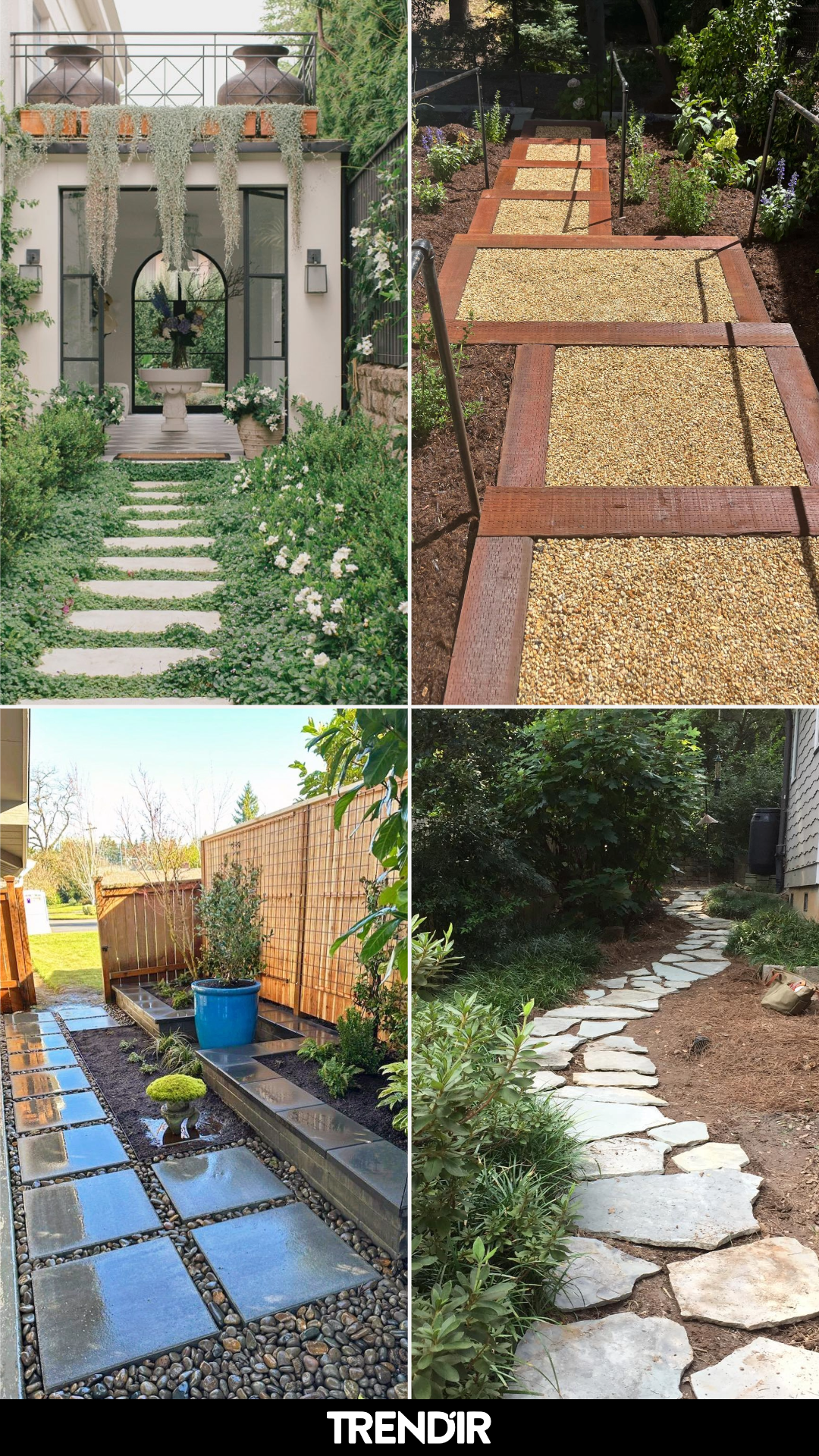
Dark square pavers laid in a grid of black Mexican beach pebbles, running from the concrete driveway into a small planted courtyard. In the Pacific Northwest, drainage is everything, and the pebble fill between pavers lets water move through instead of sitting on top. The blue ceramic pot and the moss-topped urn keep it from feeling too hardscaped, which is the trap a lot of side yards fall into.
The Front Entry Path That Reads Modern Without Being Cold
Wide rectangular concrete slabs separated by strips of artificial turf, with agaves in Mexican beach pebble filling the negative space. The grid pattern is the whole trick here: it turns a plain walkway into something graphic, and the black-framed windows and gate pick up on the same lines. This is the setup for a modern house where a traditional concrete walk would look wrong.
The Side Yard That Feels Like a Vacation Every Time You Walk It
A narrow crushed gravel path curving through banana leaves, bird of paradise, and palm fronds. Dense planting on both sides is what makes this work: it hides the fence, it shades the path so nothing dries out, and it turns the side yard into a place you go on purpose. If you have the climate for tropicals, packing plants tight is how you get a hallway instead of a hedge on one side and a bare wall on the other.
The Setup That Makes a Narrow Side Yard Feel Deliberate
A skinny strip of dark fine gravel running between clipped boxwoods on the house side and layered perennials with olive trees along the fence. The gravel is edged tight so nothing spills onto the lawn, and the plant heights step up as you move away from the porch, which pulls your eye down the path. Front-of-house side yards like this benefit most from restraint, meaning fewer plant varieties done in bigger drifts.
Where Groundcover Does the Job of Grout
Rectangular bluestone pavers set into a soft mat of dichondra or dwarf jasmine, with roses and gardenias flanking the path and hanging succulents overhead. Living groundcover between pavers is the prettier answer to grass that won’t grow in shade, and it drains as well as gravel while looking softer. It needs the right plant for your light conditions to hold up, so pick something rated for foot traffic in your zone.
The Coastal Path That Stays Bright All Year
Oval sandstone steppers set into fine white gravel, with a whitewashed retaining wall and bird of paradise plants running the length. White gravel bounces light around a narrow space, so a strip that would normally feel dark and squeezed reads bright and open instead. This is the coastal look done right: pale materials, sculptural plants, nothing fussy.
The Small-Space Setup That Works Twice as Hard
Two paths of dark square pavers, one along the house and one crossing to a raised planter bed, with dark polished pebbles filling every gap. The raised bed acts like a second walkway edge and gives you real planting depth in a spot that would normally just be dirt. Doubling up the paths this way lets you actually use a small side yard for something other than passing through.
The Kitchen Garden That Fits in the Side Yard You Already Have
A center gravel path flanked by two long wooden raised beds, with a rose-covered arbor at the entry and a wire-panel gate to keep animals out. Side yards get more sun than most people think, and the strip between two fences is the perfect shape for a couple of raised beds facing each other. If you’ve ever thought about growing vegetables but felt like you didn’t have the space, garden accessories worth building around start here.
The Path That Doesn’t Fight the Lawn
Large natural flagstone pieces set into grass with grass growing between them, running along the side of a brick house with boxwoods and arborvitaes for structure. This is the classic answer for a side yard that still needs to look like part of the lawn: the stones give you dry footing, the grass keeps the whole thing feeling continuous, and there’s no visible edge to mow around. Works best if you set the stones flush so the mower rides right over them. If you want to see how this style translates to bigger areas, landscape designs is a good next stop.
The Fix for a Shady Side Yard Where Nothing Grows
Random-shaped natural flagstone pieces laid in a curving path through pine straw mulch, with mountain laurel and liriope filling the edges under tree cover. Shade side yards are the hardest ones to make work because grass gives up and mud takes over, so the pine straw plus stone combo is your friend here; both handle low light, both drain, and both look intentional. The curve is what saves it from feeling like a straight utility path.
Which of these do you think would actually solve the muddy side yard problem at your house?
The post 14 Yard Path Ideas That Make Any Garden Feel More Put Together appeared first on Trendir.