

You can make a crowded closet feel surprisingly spacious: this is what you’re missing
You did the thing every closet article told you to do. You put in a second hanging rod. You doubled your hanging space. You felt pretty good about it for about a week.
And your closet is still a mess.
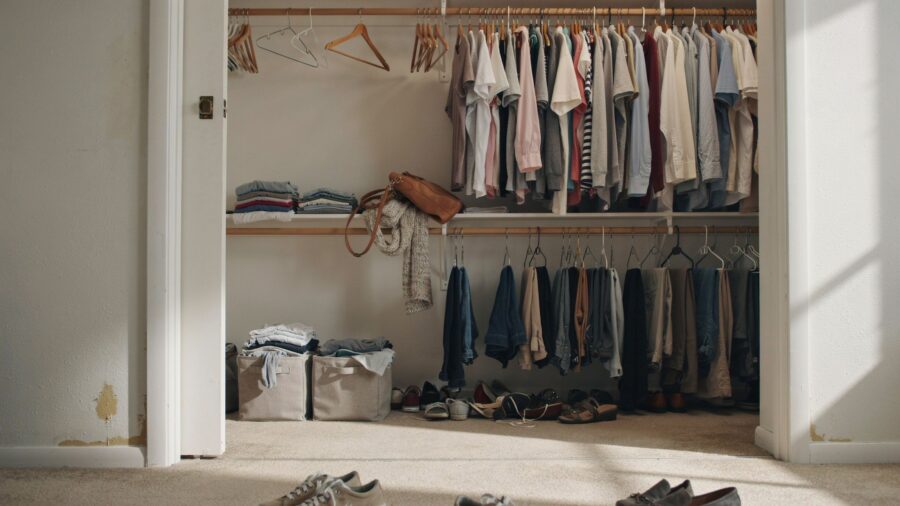
Shoes on the floor. Bags flopped over on the top shelf. A bin full of folded tees that you can’t actually see, because they’re spilling out the top. You did the fix everyone recommended, and somehow, nothing changed.
If that sounds like your closet, you’re not the problem. The advice is.
Why doubling your hanging space didn’t fix anything
Every big-name closet company and organizing website sells the same story. Add a second rod. Double your hanging. Instant space. It’s the tip you’ll see repeated on every closet article you scroll through, in near-identical wording, for a decade running.
And the advice isn’t wrong, exactly. It just isn’t the whole picture.
Look at what’s actually clogging your closet right now. Odds are it isn’t shirts. Shirts are the one thing you already have a plan for. They go on hangers, on a rod, in a line. Easy.
It’s everything else. The shoes you kick off at the end of the day. The bag you had over your shoulder. The belt you unclipped. The sweater you couldn’t be bothered to refold. The pile of scarves you keep meaning to sort. That’s the stuff that keeps piling up. That’s what’s on the floor, spilling out of bins, or slumped over on the top shelf right now.
None of it is a hanging problem. And none of it gets fixed by adding more hanging.
Professional organizers have been trying to correct this for years. When Bailey, a pro organizer profiled by Bob Vila, walks into a new client’s closet, she doesn’t ask how much hanging space they want. She asks how many shoes they own. How many bags. Whether they fold or hang their jeans. As she put it, “every single person has a different way of storing their belongings.” The rod comes later. First you figure out what needs a home.
There’s actual data on this. A 2023 survey from NAPO, the pro organizers’ trade group in the US, found that 78% of apartment dwellers with ceilings over 7.5 feet (about 2.3 meters) leave more than 30% of their vertical closet space totally unused. Not the hanging part. The top and the bottom. The floor and the space above eye level. Both are just sitting there empty, in nearly four out of five closets.
That empty space isn’t harmless either. Anything without a real spot gets tossed in a bin. The bin gets shoved on a shelf. And the shelf turns into a graveyard of things you own but can’t find.
Which brings us to the actual reason your closet, no matter how much you rehang your shirts or how many bins you buy, keeps spilling back onto the floor.
It’s not that you own too much stuff. It’s not that your closet is too small. It’s not even that you’re bad at organizing. It’s that the way you’ve been told to think about a closet, as a place to hang clothes, plus a shelf on top, plus a floor at the bottom, is roughly one third of how a professional actually thinks about it.
What paid closet designers do that a blog post won’t tell you
The pros do one thing differently, and it’s the reason their closets look the way they do. They split your closet into three separate zones, top to bottom. Every inch from the floor to the ceiling gets a job.
Zone one is hanging. That’s the double-rod setup you already have. Keep it.
Zone two is folded stuff, on real shelves, with real spacing. Not a random bin you dump sweaters into. Shelves sized for what’s actually on them. Pro designers use specific numbers for this, and they matter: about 7 inches (18 cm) between shelves for shoes, 12 inches (30 cm) for folded clothes, and 16 inches (40 cm) for bulky things like handbags. Guess at the spacing and you either waste air above a short stack, or you cram a shelf so tight you can’t grab anything without knocking the pile down. Match the spacing to the item and the same shelf suddenly holds twice as much.
Zone three is the one your closet is almost definitely missing. A real vertical setup just for shoes, bags, and accessories. Not a pile in the corner. Not a spare bin. Its own dedicated space, going up, not out.
Ashley Murphy, cofounder of the pro organizing company NEAT Method, told Real Simple that the back of a closet door and the space above eye level are two of the most wasted storage surfaces in the whole house. Between those two dead zones is where most of the stuff that “won’t fit” actually could fit, easily.
The full fix, in about two hours
The whole thing costs $50 to $200 (roughly €45 to €185) and takes an afternoon.
Put shoes on a tower or behind the door. A floor-to-ceiling shoe tower (an IKEA HYLLIS runs about $15, or search “shoe rack tower” on Amazon for options from $30 to $100) holds 12 to 20 pairs standing up, in a footprint the size of one pair of boots. No floor space to spare? A 24-pocket over-the-door shoe organizer costs about $15 to $40 and holds another 12 to 18 pairs on a door that was doing nothing.
Mount an accessory organizer on the closet wall. A jewelry organizer that mounts to your inside closet wall ($20 to $60) turns a flat surface into storage for necklaces, earrings, and watches, without eating a single inch of shelf. Add a short row of small hooks below it for belts and scarves. Install: about fifteen minutes and four screws.
Give bags their own shelf, and stuff them. Bags collapse because they’re empty. Fill each one with tissue paper or a small clutch to hold its shape, then stand them upright on a shelf like books. Or grab a six-hook bag hanger ($10 to $25). Once bags stand up on their own, they stop sliding, and the same shelf holds three times more.
Fix the spacing on your folded shelves. If a shelf is way too far above or below the pile on it, pull it out, remeasure, and put it back at 7, 12, or 16 inches (18, 30, or 40 cm) depending on what lives there. Free. Twenty minutes with a screwdriver.
Use the dead space above eye level. Add one shelf across the top of your closet, around 72 to 84 inches (roughly 1.8 to 2.1 meters) up. Store off-season clothes up there in a breathable cotton bag. You’ll reach it twice a year with a step stool.
Sources: (1) Bob Vila, How a Professional Organizer Designed the Ultimate Closet; (2) Window Decor, Closet Design Mistakes That Waste Space; (3) NAPO, Pro Organizing Tips for Every Room in the House; (4) Alibaba Life Tips, Vertical Storage Ideas (citing 2023 NAPO Urban Living Survey); (5) Better Homes & Gardens, 5 Vertical Storage Opportunities You’re Missing (Ashley Murphy, NEAT Method); (6) The Container Store, Closet Storage & Organization.
The post You can make a crowded closet feel surprisingly spacious: this is what you’re missing appeared first on Trendir.