

The lighting rule that separates an expensive-looking room from a simply bright one: here’s what it is
You did everything the design articles told you to do.
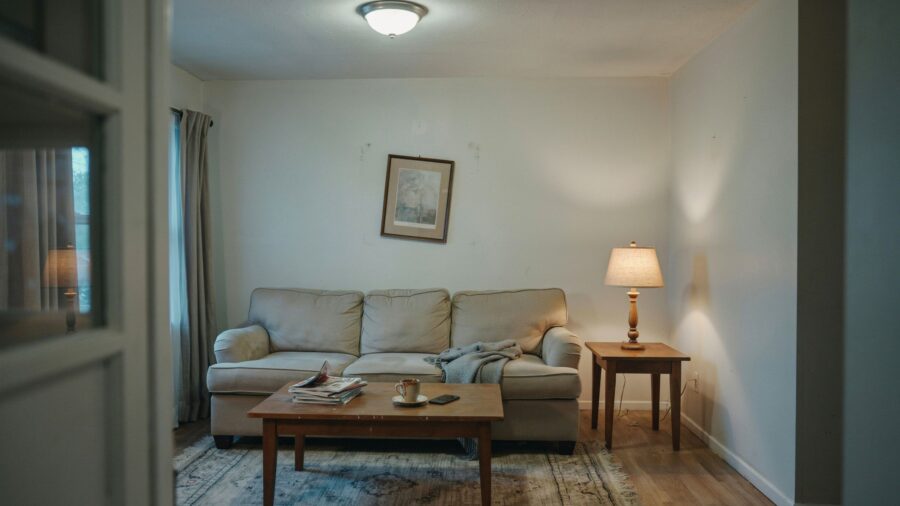
You added a table lamp. You added a floor lamp. You put them on dimmers. And your living room still looks like a rental at 8 p.m. on a Tuesday. Bright, sure. But flat. The kind of flat that makes a $2,000 sofa look like it came from a chain hotel lobby.
Meanwhile, your friend’s apartment feels like a wine bar. Same kind of furniture. Same warm bulbs. Same “layered lighting” tips pinned on Pinterest. Something’s different, and it isn’t the lamps.
Almost every article on this stops at the same rule. That rule is real, and it does something. But it’s not the whole story. There’s a second rule sitting underneath it that nobody names. Designers use it all the time. Restaurants and hotels build their whole evening mood around it. Once you spot it, you can’t stop spotting it.
The one rule everyone knows
You’ve read it a hundred times. It’s called layered lighting. The American Lighting Association explains it this way: every well-lit room needs three types of light working together.
Ambient is the general light that lets you see and walk around.
Task is the focused light for reading, cooking, or getting work done.
Accent is the pretty light that shows off art, a plant, or a nice corner.
That’s a real design idea. It’s been around forever, and it does what it says.
The problem is what most people do with it.
You buy a table lamp for the side table, keep the ceiling light on, and figure that’s close enough. Your room is now “layered.” It also looks like every other living room in America after dark.
Homes & Gardens, in its guide to layered lighting, points out the catch. It’s not enough to have the three types of light. You also have to switch them on and off on their own, and place them so the light actually comes from different spots in the room. Not just different names.
Two lamps and a ceiling light is three fixtures, technically. But if they’re all pouring light down from up top, your eye sees one big wash. Flat.
What “flat” actually means
Walk into any restaurant that feels pricey. You can barely see the ceiling. In fact, the ceiling isn’t lit at all. The light is coming from candles on the tables, small lamps on the bar, wall lights, and maybe a little spotlight over a piece of art. Nothing up high. Nothing shining straight down on your head.
Your eye is doing something specific there. It’s reading the mix of light and shadow. The dark corners matter as much as the lit ones. Kill the shadows, and the room feels like a doctor’s waiting room, no matter how nice the couch is.
Designer Maria Killam runs one of the biggest color and design blogs in North America. Her sister Anita Junttila describes what changed after they stopped using their overhead lights at night: “It makes the room so cozy that we never turn on the weird ceiling light we inherited unless we lose something under the couch.“
That’s the tell. Designers don’t just add lamps. They also turn the ceiling light off. And the second that ceiling light goes off, the “three types of lighting” rule you learned has a big hole in it, because that rule assumed the ceiling was doing the general lighting for you.
So what fills the hole? That’s the second rule. And it’s simpler than the first one.
Think about the last hotel hallway you walked through. Bright, but somehow ugly. That’s what happens when all the light is coming straight down from above. Your face gets hit head-on. No side-shadows to soften anything. Your brain reads the whole scene as clinical, even if the carpet’s nice.
Your living room is doing the same thing at 8 p.m. when the ceiling light is running the show. You added lamps, sure. But they’re small next to the big wash of light coming down, so they don’t get to do their job. The room just looks lit.
The world outside your window works differently once the sun sets. As the Australian studio Radiant Lighting puts it in a piece called “The Evening Room”: at night, the only natural light we get, moonlight, firelight, candlelight, comes from below or beside us. Never straight down. Light from up top tells your body it’s noon. Warm light from the side tells your body it’s evening.
Your ceiling light, in other words, is doing the wrong job at the wrong time. And the fix isn’t more lamps. It’s where you put them.
The rule the design articles skip
Three lights at three different heights. All below the ceiling. All warm.
That’s it. That’s what nobody spells out.
London lighting designer Brandon Schubert calls it working in three levels: high, at eye level, and low. In a room built for evenings, the ceiling level gets skipped. Your three lights sit at seated eye level, low to the ground, and high on the wall. None of them is the ceiling fixture.
It sounds too simple. It changes the whole room, because it copies what nature does after sundown.
How to actually do it
No renovation. No electrician. You probably already own two of the three lights you need.
Set three lights at three heights, warm bulbs only, ceiling light off.
Seated eye level (26 to 30 inches / 66 to 76 cm off the floor). A table lamp on a side table by the sofa. The bottom of the shade should sit right around your eye when you’re seated, so the bulb doesn’t shine in your face. JRL Interiors puts wall lights at standing eye level, roughly 60 to 65 inches; a table lamp is about half that.
Low (under 20 inches / 50 cm). A small floor uplight tucked behind a plant, a picture light over some art, or a little lamp on a low shelf. This is the height most people skip, and the one that makes the room look pricey.
High on the wall (60 inches / 152 cm or higher). A plug-in wall sconce, a tall floor lamp, or a picture light.
Use warm bulbs (2700K, not brighter than 3000K). Cooler than that and the room feels like a bathroom. Bulb brand LEDVANCE calls 2700K a “warm, soft glow” like the old-school bulbs everyone grew up with, which is exactly the color of the restaurants and hotels you’re copying.
The ceiling light only comes on for cleaning, cooking, or finding something you dropped. Not for dinner. Not for movie night. Not for a normal Tuesday.
Put every lamp on a smart plug. An Amazon Basics 2-pack sells for about $10.50, so three plugs run $15 to $30 (about €14 to €28). Set them to click on at sunset. Done.
If you already own two lamps, adding a plug-in wall sconce or a tall floor lamp runs $40 to $120 (about €37 to €112). Total setup, well under $150 (roughly €140).
What changes
You’ll see it the first evening. The room stops looking lit and starts looking composed. Shadows show up in the corners. Your eye moves around the room instead of getting hit in the face. Photos of the space suddenly look like the magazine ones you were copying, and it isn’t the couch. It’s the shadows.
Sources: (1) American Lighting Association, on layered lighting; (2) Homes & Gardens, “How to layer lighting”; (3) Maria Killam, “Turn off your overhead lights forever”; (4) Nadine Stay, on Brandon Schubert’s three levels of light; (5) Radiant Lighting, “The Evening Room: The Lighting Idea We’re Missing”; (6) JRL Interiors, on light fixture heights; (7) LEDVANCE, on 2700K vs 3000K color temperature; (8) Slickdeals, on Amazon Basics smart plug pricing.
The post The lighting rule that separates an expensive-looking room from a simply bright one: here’s what it is appeared first on Trendir.