

Toddler in the house? One thing in your kitchen is a bigger risk than most parents think
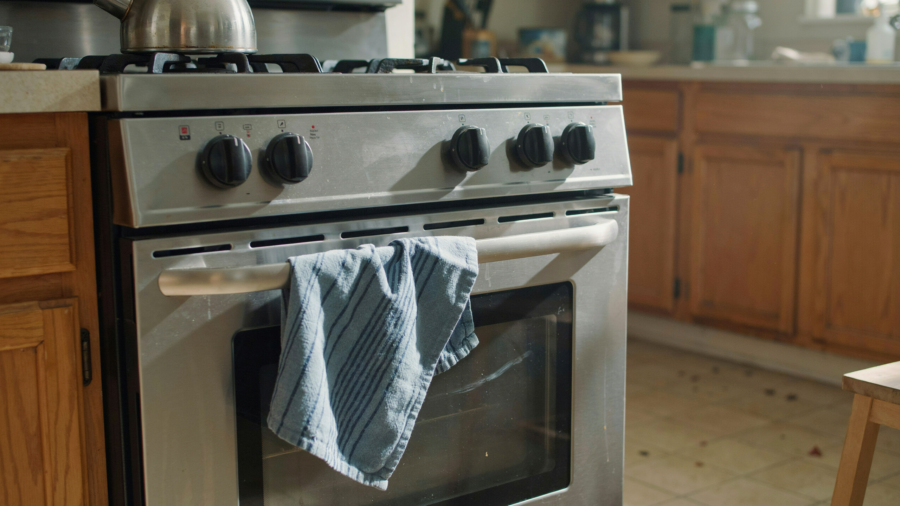
If you’ve got a toddler in the house, you’ve already done the obvious stuff. Outlet covers. Cabinet latches. TV strapped to the wall. Cleaners moved up high. You baby-proofed the bathroom, checked the crib, watched the stairs.
The thing almost no parent thinks about, and it’s sitting at your child’s eye level right now in the kitchen.
It isn’t a chemical. It isn’t a cord. It isn’t the oven door. It’s something you walk past twenty times a day and trust completely, and federal safety officials have quietly tied it to hundreds of house fires, pet deaths, and burn injuries in just the last two years. And the reason it keeps happening has nothing to do with whether you left it “on” or “off.”
The safety habit that isn’t really a safety habit
Almost every parent does the same thing after cooking. Turn the knobs off. Give them a quick look to make sure they’re pointing up. Walk away.
That’s the whole safety step, in most kitchens, for most families.
The problem is that this habit is built on a belief that turns out to be wrong: that a knob you set to off will stay off.
According to the U.S. Consumer Product Safety Commission (CPSC), that belief is behind two of the biggest kitchen appliance recalls in recent memory. In August 2024, Samsung pulled back roughly 1.12 million slide-in electric stoves after more than 300 reports of the front knobs turning on by themselves from an accidental bump. Those stoves were tied to about 250 fires, 40 injuries, and seven pet deaths, per the CPSC recall notice.
Six months later, in February 2025, LG did the same thing with about 500,000 electric stoves for the same problem. CPSC counted at least 86 reports of knobs switching on by accident, 28 fires, and more than $340,000 (about €315,000) in property damage. As recently as July 2026, Best Buy pulled its Insignia gas stoves for the exact same reason.
The federal warning in every one of those notices reads almost word-for-word the same: “Consumers are cautioned to keep children and pets away from the knobs, to check the range knobs to ensure they are off before leaving home or going to bed, and not to leave objects on the range when the range is not in use.”
Read that carefully. It doesn’t say “double-check the setting.” It’s telling you something more unsettling than that.
Because the question no one asks is this. If parents everywhere are turning the knobs off after cooking, if they’re being careful, if they’re checking twice before bed, then how are these stoves still switching themselves on hundreds of times a year? How are pets dying? How are homes catching fire in the middle of the night? What’s actually happening in these kitchens between the moment the parent walks away and the moment 911 gets called?
The answer isn’t a broken stove. It isn’t a defective part. It’s a design detail so small and so ordinary that once you see it, you can’t unsee it, and it’s sitting on almost every stove sold in the last ten years.
Why “off” isn’t really off with a small child in the room
It comes down to two things almost nobody notices. Those front-facing stove knobs sit at the very front of the stove, roughly 30 to 36 inches (75–90 cm) off the floor. That’s exactly toddler face height. It’s also exactly where a passing hip, a dog’s shoulder, a leaning grocery bag, or a curious two-year-old grabs to catch their balance. And it doesn’t take much to turn one on. Most home stoves only need a light push and a quick twist. Even a soft bump against a front knob can turn it just enough to release gas or heat up an electric burner.
This is where it gets scary for gas stoves. If the knob turns but the flame doesn’t actually light, raw gas starts flowing straight into the room. That gas is mostly methane, which has no smell. Gas companies add a chemical that smells like rotten eggs so you can notice a leak, but if the kitchen door is closed or the family is asleep, by the time anyone smells it, there’s already a real problem in the room with your child in it.
If the burner does light up, every recall notice warns about the other side of it: anything sitting on the stovetop can catch fire. An oven mitt shoved to the back. A plastic cutting board leaning against the wall. A dish towel. A CPSC-linked KitchenAid report described a donut box on a cold stove catching fire after a knob got bumped on. The family happened to be home. A lot of families aren’t.
Zoom out and it looks like this. The U.S. Fire Administration says cooking gear is the number one cause of home fires in the country, and about 1 in 8 of those kitchen fires are set off by a burner or oven that got turned on by accident, or never got turned off. That’s the exact failure we’re talking about.
The fix costs almost nothing and takes under a minute
If any of that sounds like your kitchen, you’re not alone. Front-facing knobs are on a huge share of stoves sold in the last decade, gas and electric both. The good news is the fix that CPSC and the stove makers themselves point people to is cheap, fast, and needs zero tools.
You’ve got two options, and either one shuts the problem down.
Option 1: pop on stove knob covers. These are clear, heat-safe plastic shells that snap over your existing knobs. To turn the stove on, an adult has to pinch two little tabs at the same time while twisting, which is a two-handed move a toddler just can’t pull off. A universal pack runs about $7 to $10 (roughly €7 to €10) at any big-box store or online. Snapping them on takes under a minute each. In both the Samsung and LG recalls, this is the exact fix the makers are shipping to affected customers, free of charge.
Option 2: pull the knobs off the stove. On most home stoves, the knobs pull straight off the metal stem. No damage, no tools, no cost. Stash them in the drawer next to the stove. When you want to cook, pop one back on, it takes three seconds. This is the quiet winner if you’re renting, if your stove doesn’t fit standard covers, or if you just don’t want to buy anything.
A quick checklist to run this weekend:
Look at your stove from your kid’s eye level. Squat down. If the knobs are within reach, that’s your answer.
Pick one of the two fixes above. Either works. Don’t skip both because you can’t decide.
Do it before tonight’s bedtime. Recall data flags the overnight hours specifically.
Clear the stovetop. Move mitts, paper towels, plastic, and boxes off the stove. If a burner ever does turn on by accident, nothing should be sitting there to catch.
Test your smoke alarm. One press. That’s your last line of defense.
Sources: (1) CPSC, Samsung Recalls Slide-In Electric Ranges Due to Fire Hazard, August 2024; (2) CPSC, LG Recalls Electric Ranges Due to Fire Hazard, February 2025; (3) CPSC, Best Buy Recalls Insignia Gas Ranges Due to Risk of Serious Injury from a Fire Hazard, July 2026; (4) U.S. Fire Administration, Cooking Fires in Residential Buildings, TFRS Volume 21 Issue 5; (5) U.S. Fire Administration, Cooking Fire Safety.
The post Toddler in the house? One thing in your kitchen is a bigger risk than most parents think appeared first on Trendir.