

Warning: this one mistake in almost every home puts everyone inside at risk of fire or gas leaks
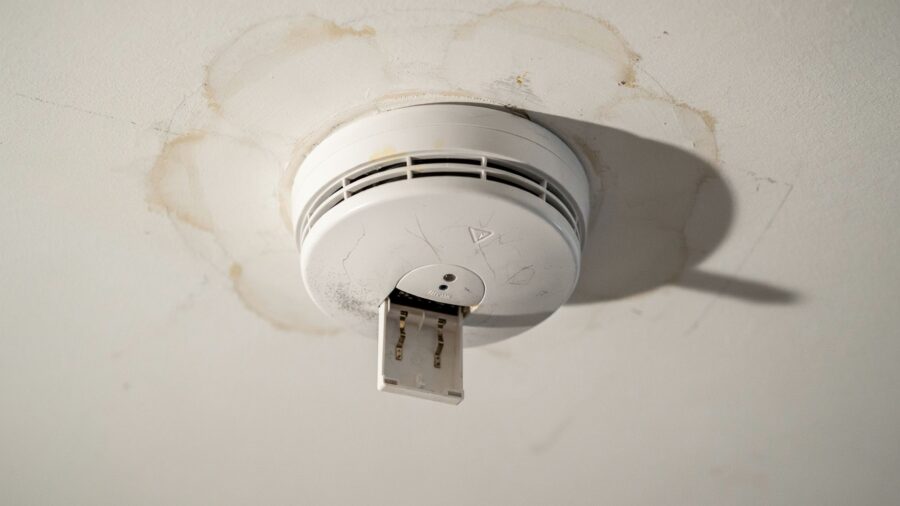
It always starts at the worst possible hour. That tiny, sharp chirp from the ceiling. Once a minute. Then again. Then again.
You’re tired. You grab a chair, pop the cover, pull the battery out, and the house goes quiet. You tell yourself you’ll grab a new 9-volt tomorrow. Maybe this weekend. And that little white disc sits up there on your ceiling, silent, for weeks.
Almost every American home has done some version of this. And it’s quietly one of the most dangerous habits in the country. Not because you did anything wildly reckless. But because of one thing about that chirp that almost nobody outside the fire service actually knows.
What firefighters keep finding on the ceiling
When firefighters walk through a house after a fatal fire, the first thing they check is the smoke alarms. And what they find, over and over, isn’t a broken alarm. It’s an alarm with nothing inside it.
The National Fire Protection Association (NFPA) has been tracking this for decades. More than half (54%) of smoke alarm failures in home fires were because the battery was missing or disconnected. Another 19% were because the battery was dead. In the most recent NFPA study covering 2018 to 2022, smoke alarms were present in three out of four home fires, but 16% of the time they didn’t go off. Of those that didn’t work, 35% had missing or disconnected batteries.
That’s not a design flaw. That’s people pulling batteries out and never putting new ones in.
And the price of that habit isn’t small. The death rate per 1,000 home fires was more than twice as high in homes without any working smoke alarms compared to homes with working ones (12.3 deaths versus 5.7). A working smoke alarm cuts your risk of dying in a house fire roughly in half. A missing battery wipes that protection out.
Why “I’ll change it tomorrow” is the trap
When you pull the battery, your brain files the problem as done. The noise stopped. The follow-up (buying the battery, climbing back up on the chair, putting it in) drifts onto a mental to-do list that keeps getting bumped. A day becomes a week. A week becomes a month. Meanwhile, the alarm on your ceiling is just a piece of plastic.
This problem is so widespread that some states rewrote their laws over it. As the US Army Public Health Center put it, Maryland changed state law to require 10-year sealed-battery smoke and carbon monoxide detectors because homeowners would get frustrated with the chirping, take the batteries out, and make their detectors useless. The whole point of a sealed unit is that you can’t pull the battery out.
The 1 to 3 minute window that decides everything
Modern homes burn much faster than older ones. Foam couches, synthetic carpet, engineered wood, plastic. All of it turns a small fire into a whole-room fire fast.
Fire Safety Research Institute research shows you have three minutes or less to get out of a modern house fire. NFPA safety materials put it even tighter for the worst cases. A fire can spread so fast through a home that you may have as little as one or two minutes to get out safely once the smoke alarm sounds.
Now picture that same fire in a house where the alarm has no battery. Nobody wakes up. Nobody hears anything. That short window is already gone by the time someone smells smoke.
Carbon monoxide (CO) is worse in one specific way, because you can’t see it, smell it, or taste it. The CDC lists furnaces, kerosene heaters, cars idling in garages, stoves, gas cooktops, portable generators, and burning wood or charcoal as the most common home sources of carbon monoxide. In higher amounts, these can reach deadly levels within minutes. A CO detector without a battery isn’t a safety device. It’s a plastic circle on your wall.
This is where the whole thing turns. Because the chirp you keep silencing is doing something very specific for you, on purpose. And once you see what it is, pulling the battery stops feeling like a small shortcut and starts feeling like exactly what it really is.
The chirp is not the problem. Missing the chirp is.
That chirp every 30 to 60 seconds isn’t a glitch. It isn’t the alarm being annoying. It’s the single most important message your alarm will ever send you before a real emergency.
Every major manufacturer follows the same signal pattern. A single chirp every 30 to 60 seconds usually means the battery is low. A loud, continuous blast means an actual fire or emergency. Carbon monoxide detectors work the same way. First Alert’s signal chart is blunt. Four beeps and a pause means carbon monoxide has been detected, and you should move to fresh air and call 9-1-1. One beep every minute means low battery. Five beeps every minute means end of life.
So the chirp is the alarm doing its job. It’s telling you it needs a couple of minutes and about $3 (about €3) to keep protecting your family for the next full year.
When you yank the battery instead of swapping it, you aren’t silencing an annoyance. You’re turning off the only warning system in your house until whenever you happen to remember to buy a battery.
What to actually do when it chirps
Here’s what to do instead. It costs less than a coffee.
Keep a 4-pack of fresh 9-volt batteries (or AA, depending on your model) in a drawer you’ll actually remember. Kitchen junk drawer, hall closet, wherever you already look. When you hear a chirp, the fix is already in your house.
Swap the battery the same day you hear the first chirp. Not this weekend. That day. A battery-powered smoke alarm usually chirps for about 30 days once the battery is low. You don’t know where in that window you are.
Push the test button after you put the new battery in. Hold it for a few seconds. You should hear the full loud alarm. If you don’t, the alarm itself has died and you need a new one.
If it goes off while you’re cooking or during a steamy shower, still don’t pull the battery. The US Fire Administration is clear. Never take the battery out of your smoke alarm while cooking. If it goes off from cooking or shower steam, open a window or door, press the hush button, wave a towel at the alarm, and move the alarm several feet (about 1 to 2 m) away from the kitchen or bathroom. Hush button, not battery pull.
Test every alarm once a month. Change the batteries once a year. The US Fire Administration says to test smoke alarms every month and replace 9-volt batteries at least once a year. Smoke alarms don’t last forever. Get new ones every 10 years. CO detectors don’t last as long. Most last 5 to 7 years and should be replaced at 7 years because the sensor wears out.
If chirping is a constant headache, upgrade to a sealed 10-year alarm. These have a lithium battery you can’t take out. When it finally chirps at end of life, you replace the whole unit. No more 3 a.m. battery hunts.
Sources: (1) Roof Maxx smoke alarm chirping guide; (2) ArhFoundation low battery chirp guide; (3) The Battery Tips chirp duration guide; (4) Office of Congressional Workplace Rights, Smoke Detectors Provide Early Warning of Danger (NFPA data); (5) MySmokeAlarm.org NFPA statistics; (6) UL Standards & Engagement, UL Smoke Alarm Standards Required by 2025 NFPA Fire Alarm and Signaling Code; (7) US Army Public Health Center, Spring forward safely, change fire alarm batteries; (8) First Alert, Carbon Monoxide Detector Beeping guide; (9) US Fire Administration (USFA/FEMA), Smoke Alarms; (10) Auburn, CA, NFPA Plan Your Escape; (11) Gen Security, Carbon Monoxide Detector Beeping (CDC source data).
The post Warning: this one mistake in almost every home puts everyone inside at risk of fire or gas leaks appeared first on Trendir.