

26 Spring Pollinator Garden Ideas That Make Butterflies Show Up Like It’s Scheduled
Creating a garden that supports bees, butterflies, and other pollinators is a beautiful way to give back to nature this spring. These 26 spring pollinator garden ideas are vibrant, eco-friendly, and full of life perfect for attracting beneficial wildlife, boosting your garden’s health, and turning your space into a buzzing, blooming haven.
26 Spring Pollinator Garden Ideas That Attract Bees, Butterflies, and Beauty in 2026
Spring 2026 is all about creating gardens that are not just beautiful, but buzzing with life. Pollinator-friendly spaces are trending in a big way, blending vibrant blooms, native plants, and eco-conscious design to support bees, butterflies, and more.
Whether you have a small backyard or a spacious garden, adding pollinator-friendly touches can make a meaningful impact while elevating your outdoor style. This list is filled with fresh, inspiring ideas to help you create a garden that feels lively, colorful, and full of purpose—let’s make it bloom with life.
1. Wildflower Walkway Moment
There’s something about a narrow garden path wrapped in swaying coneflowers that feels straight out of a slow Sunday morning. The blooms lean in just enough to soften the edges, creating that effortless, slightly overgrown charm that pollinators love and designers quietly chase.
What makes this work is the layering, tall stems in the back, softer fillers near the path, and just enough breathing room for light to spill through. It feels natural, not staged, like the garden simply decided to show off this season.
2. Clover Lawn Softscape
A clover lawn reads like a secret. From afar it’s just green, but step closer and you notice the tiny white blossoms dotting the ground like confetti.
It’s a gentle shift from traditional grass, one that invites bees without turning your yard into a full meadow. I love this for anyone easing into pollinator planting, it keeps things low, soft underfoot, and quietly alive.
3. Cottage Border in Full Bloom
This is where things start to feel a little more romantic. Layers of pinks, yellows, and purples gather against the home, climbing and spilling in that classic cottage rhythm.
The mix feels intuitive rather than planned, which is exactly the point. Pairing structured elements like brick with this kind of looseness keeps the space grounded, not chaotic.
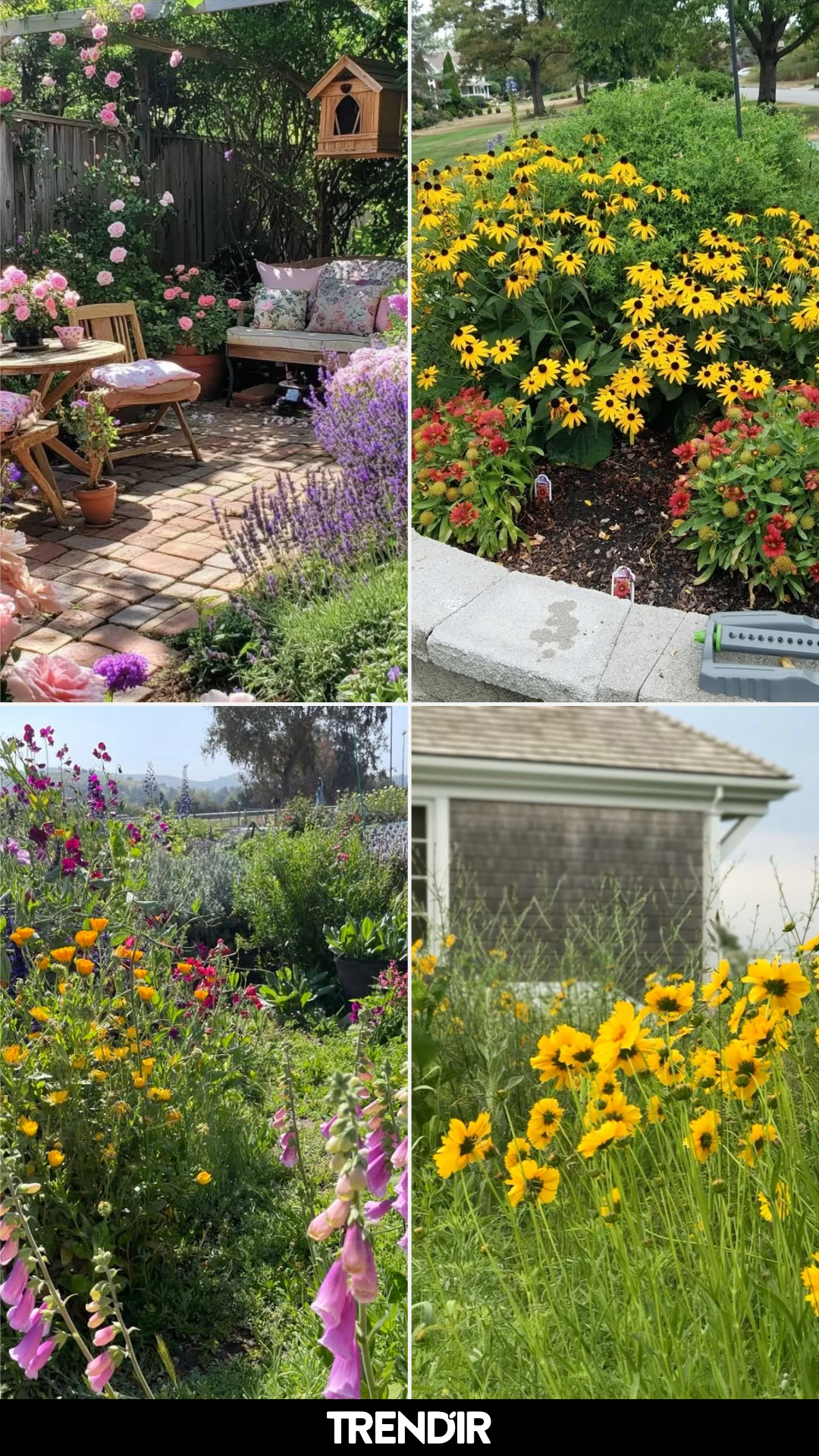
4. Coastal Yellow Drift
A sweep of yellow wildflowers catching the breeze has a way of making everything feel lighter. The house sits back, almost secondary, while the garden takes center stage.
This kind of planting thrives on repetition. Let one variety dominate, and suddenly the space feels intentional, like a painter committed to a single brushstroke.
5. Structured Pollinator Beds
Raised beds bring a tailored edge to what can often feel like a wild concept. The rust-toned steel frames give just enough contrast to all that green, keeping things crisp.
It’s a smart balance, especially if you love pollinator gardens but still want a sense of order. Think of it as garden meets editorial layout.
6. Romantic Garden Layers
This one feels like stepping into a storybook. Curved stone paths, climbing blooms, and soft color shifts guide you through without a clear start or finish.
Pollinators thrive in this kind of layered planting, and so do slow afternoons. Let the garden feel a little unruly here, that’s where the magic settles in.
7. Patio Garden Pause
Tucked beside a blooming hedge, this simple lounge chair becomes a moment. Lavender tones echo from the flowers to the textiles, tying everything together without trying too hard.
It’s a reminder that pollinator gardens are not just for looking at. Leave space to sit, sip something cold, and watch the movement.
8. English Courtyard Bloom
An enclosed garden like this feels lush in the best way. Tall stems, soft whites, and climbing greens blur the boundaries between architecture and planting.
There’s a quiet confidence here, nothing feels forced. Letting plants reach and mingle creates a habitat that feels alive rather than arranged.
9. Early Spring Pocket Garden
Small, fresh, and just waking up, this little patch captures that first hint of the season. Daffodils and crocuses peek through dark soil, a soft contrast that feels hopeful.
It’s proof you don’t need a full yard to support pollinators. Even a tucked-away corner can become its own tiny ecosystem.
10. Butterfly Garden in Motion
Bright zinnias and soft greenery set the stage, but it’s the butterfly that brings it all to life. The garden feels active, like it’s constantly in conversation with the world around it.
Choosing bold, nectar-rich blooms makes all the difference here. It turns your garden from something you admire into something that moves, shifts, and surprises you.
11. Layered Border with a Garden Friend
This border feels like it’s been loved for years, the kind where every plant knows exactly where it belongs. Bright petunias spill forward, airy greens soften the edges, and taller blooms rise just enough to create depth without blocking the view.
And then there’s that small garden statue tucked in like a quiet observer. It adds personality without stealing attention, a reminder that pollinator gardens can feel playful and personal, not just practical.
12. Front Yard Pollinator Welcome
A front yard like this greets you before you even reach the door. Layers of shrubs, perennials, and flowering bursts create a full, lived-in look that feels both welcoming and a little wild.
What I love most is the mix of structure and softness. Anchoring the space with evergreens keeps it grounded, while the colorful blooms invite bees and butterflies to linger.
13. Rose-Covered Patio Escape
This corner feels like a pause button. Climbing roses wrap the pergola, lavender spills at your feet, and a small table waits for coffee that turns into a long afternoon.
Pollinator planting here feels intentional but relaxed. Fragrant blooms draw in bees, while layered seating and soft textiles make it just as inviting for you.
14. Meadow-Inspired Soft Focus
There’s a quiet beauty in letting plants sway and blur together like this. Tall purple spikes rise through a sea of green, catching the light in a way that feels almost cinematic.
It’s less about precision and more about movement. Letting plants cluster naturally creates a space that feels alive, like it’s shifting with every breeze.
15. Container Garden Pop
Not every pollinator garden needs soil underfoot. A cluster of textured pots filled with bright blooms can do just as much, especially on a porch or small patio.
Mixing heights and finishes keeps it visually interesting. Pair glossy ceramics with rough stone textures to give the arrangement depth without overcrowding the space.
16. Spiral Garden Statement
This one leans a little whimsical, and it works. A sculpted spiral of greenery wrapped in color feels like a centerpiece that doubles as a pollinator haven.
The key here is repetition and flow. Let the colors travel upward and outward so the eye moves naturally, just like the bees will.
17. Curated Pathway Garden
A stepping stone path weaving through blooms instantly invites you in. Tulips and low hedges frame the walkway, creating a garden that feels both structured and soft.
It’s a balance that’s easy to fall in love with. Keep the lines clean, then let the flowers do the wandering.
18. Casual Curbside Bloom
This edge-of-the-yard planting feels relaxed in the best way. Warm-toned flowers cluster together, blending into one another without strict borders.
It’s the kind of garden that doesn’t ask for attention but gets it anyway. Perfect for adding pollinator-friendly planting without overthinking the layout.
19. Wildflower Garden Bed
Here, everything feels abundant. Foxgloves, daisies, and bright pops of color stretch upward, creating a layered look that feels straight from the countryside.
The magic is in the density. Planting close and letting varieties intermingle creates a rich feeding ground for pollinators while keeping the space visually full.
20. Community Pollinator Haven
This garden feels shared, open, and full of life. Raised beds, pathways, and clusters of blooms come together in a way that feels both purposeful and welcoming.
It’s not about perfection here. It’s about creating a space where people and pollinators meet, where the garden becomes something you experience, not just admire.
21. Sculptural Pollinator Accent
This one leans a little unexpected, and that’s exactly why it works. Metal blooms rise from the ground like a modern wildflower patch, catching the light in a way that feels both playful and bold.
It’s a reminder that pollinator gardens can go beyond plants. Mixing in sculptural elements adds height and personality, especially in drier landscapes where greenery isn’t always the star.
22. Foraged Arrangement Moment
A simple arrangement like this feels intimate, like something gathered on a quiet morning walk. Warm-toned dahlias and soft foliage come together in a way that feels effortless but deeply considered.
It’s a different take on pollinator gardening, bringing the outside in. Let your garden double as a source for these small, lived-in moments that feel personal and seasonal.
23. Linear Pollinator Rows
There’s something satisfying about a garden that follows a rhythm. Rows of blooms stretch out neatly, creating a visual calm while still supporting plenty of pollinator activity.
This approach feels grounded and practical. It’s perfect if you want a garden that’s easy to maintain but still full of life and movement.
24. Roadside Pollinator Patch
This kind of planting feels generous. Bright black-eyed Susans gather in clusters, softening the edge of a sidewalk and turning an overlooked strip into something vibrant.
It’s proof that even the smallest spaces can become pollinator-friendly. Sometimes all it takes is letting a few hardy blooms take over and do their thing.
25. Romantic Garden Pathway
A winding path framed by soft pinks and airy purples feels like an invitation you don’t rush. The flowers lean in just enough to guide you forward, creating that dreamy, immersive feel.
Layering here is everything. Keep taller blooms toward the back and let the softer ones spill forward to create that gentle, flowing movement.
26. Maximalist Backyard Bloom
This space feels full in the best way. Hanging baskets, layered pots, and bursts of color turn a small backyard into something lush and alive.
It’s a reminder that more can be more, if it’s done with intention. Repeating colors and mixing heights keeps the space from feeling cluttered, while still giving pollinators plenty to explore.
The post 26 Spring Pollinator Garden Ideas That Make Butterflies Show Up Like It’s Scheduled appeared first on Trendir.