

Goodbye to the Sliding Shower Door: The Alternatives Showing Up in Smaller Bathrooms
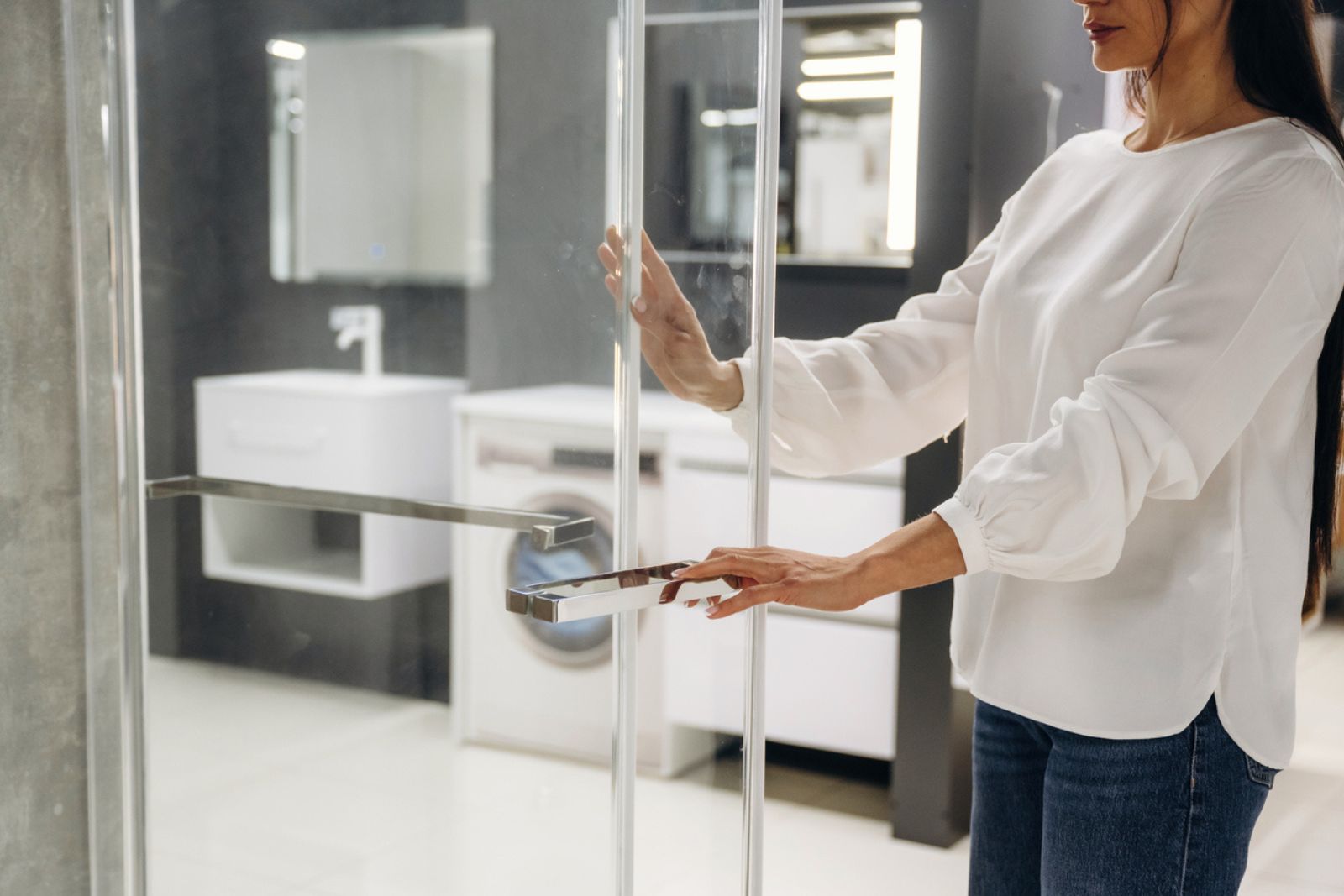
© standret
Every few weeks, you kneel next to the tub with an old toothbrush and scrub the bottom track of the sliding shower doors. Gray gunk comes out of the corners, the rollers catch, and the two panels still never quite line up. In a small bathroom, the framed glass makes the whole room feel boxed in.
This is not your fault. Sliding doors became the default in small bathrooms for a good reason: Dulles Glass, a shower door company, notes that they need zero swing clearance. But the track is the weak spot. As shower door maker Vigo puts it, “Ask anyone who has owned a sliding door what they would change, and the answer is usually the bottom track.” Blogger Amanda of Life at Cloverhill, who took out her “outdated sliding glass doors,” wrote that she had always found the glass door and track system hard to keep clean with her hard water.
Why sliding doors are hard to live with
Dulles Glass lists the drawbacks plainly: the bottom track can collect soap scum, and roller mechanisms can wear over years. Vigo describes that track as a channel that collects soap scum and standing water, and says it is nearly impossible to reach inside. Sliders are also fussy to install, Vigo adds, with two panels, a header, rollers to adjust and tracks to level.
The alternatives worth considering
A fixed glass panel. For both bathrooms in a two-bedroom flip house, DIY blogger Kate Riley of Centsational Style chose single-pane frameless glass panels in satin brass instead of shower doors. She found them far cheaper than a local bid for doors, with less glass to clean, and prefers them for small to mid-size bathrooms with walk-in showers. Vigo says upkeep is a squeegee pass after showering.
A pivot door. Dulles Glass describes it as a single glass panel that rotates on top and bottom pivot points and opens both inward and outward. It needs clear space on both sides of the pivot and a panel at least 30 inches wide, with 34 inches or more looking best.
A hinged door. Dulles Glass says it needs a clear swing path in front and can hit toilets, vanities or walls in tight layouts.
A frameless slider. If you still need a slider, Dulles Glass notes that fully frameless versions use a top track with a minimal profile and no visible side frames.
Whatever you choose, the caulk line where glass meets tile needs attention, and it helps to know why mold keeps coming back there.
When a sliding door is still the right call
Be honest about your space. Dulles Glass says pivot doors are not suitable for small bathrooms and recommends sliders when a bathroom is tight. For tub-shower combos, the company notes that big-box stores typically sell 60-inch bypass sliders.
A fixed panel works best on a walk-in shower with room to step in and out beyond the glass. Kate Riley says splashing is “Not as much as you think!” but suggests a small washable mat and attention to where the showerhead points. She also notes that panels don’t enclose as much as doors, so there is some loss of steam. At Dulles Glass, pivot doors are custom installs only, so get a professional measurement before you remove the old doors. Renters should ask the landlord first.
Measure the swing, aim the showerhead and pick the glass that fits the room. That’s the trick.
The post Goodbye to the Sliding Shower Door: The Alternatives Showing Up in Smaller Bathrooms appeared first on Trendir.