

Before the First Hard Freeze: Why Terracotta Pots Crack Outside and How Gardeners Prevent It
© Sulari Thimchukun
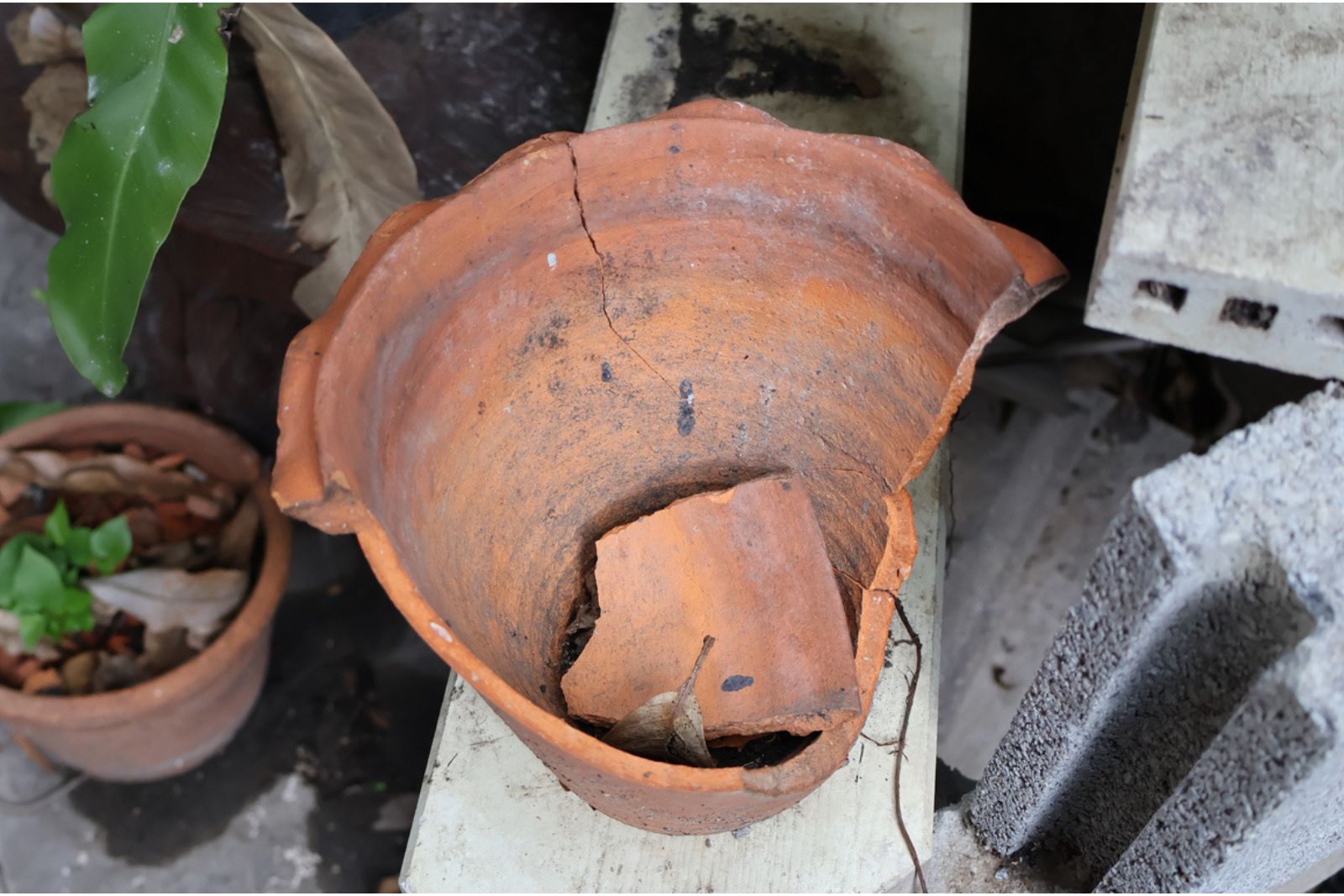
The summer flowers are long gone, so you tip the soil out of your terracotta pots and stack them by the back steps for next year. In March, you go to pick them up and half of them are split down the side, or the rims have flaked off in curved chips.
This is not your fault. An empty pot looks harmless, and it’s easy to assume that without soil, there’s nothing to freeze. But clay itself holds water. Tim Johnson, director of horticulture at Chicago Botanic Garden, explains that terra cotta containers absorb water, and the freeze-and-thaw cycles of winter can crack them if they’re left outside.
Why terracotta cracks in the cold
Unglazed terracotta is porous. A guide posted by the Gwinnett County Master Gardeners explains that water seeps into the open pores of the clay and evaporates slowly over time. When that trapped water freezes, it expands and can flake off pieces of the pot. The same guide notes that damp soil expands when it freezes too, which often causes near-vertical cracks that start at the rim.
That’s why emptying a pot helps but doesn’t fully protect it. If the clay is still damp from rain, snow or sitting on wet ground, the pores can hold enough water to do damage. A Colorado Master Gardener answering a reader question put it simply: terracotta pots absorb water, so it’s best to empty them and store them where they won’t absorb water from the ground and crack.
How gardeners protect terracotta over winter
Empty the pots before a hard freeze. Remove the soil and old roots. Johnson recommends emptying the growing medium before storage.
Let them dry. Brush off loose soil and give the pots time to dry out in a sheltered spot before you put them away.
Store them where it stays dry. Johnson suggests a garage or shed, out of the rain. The Gwinnett guide also lists a garage or any covered shelter.
Turn them upside down. The Gwinnett guide recommends storing pots upside down so no puddles of water collect inside.
Keep them off the ground. If the pots have to stay outside, set them upside down on bricks, rocks or pieces of lumber so the rims don’t soak up water. Johnson adds to cover them with a tarp.
Large pots that are too heavy to move are the hardest case. The Gwinnett guide admits many pots, even of modest size, can be too heavy to carry very far, and advises doing the best you can without hurting your back. Raising them and covering them in place is the next best option. If you’re short on storage, a garden shed like the ones in these garden shed ideas makes the job easier every fall.
What storage can’t fix
Emptying isn’t an option if a plant is still growing in the pot. In that case, the pot and the soil both hold water, so moving the whole container into a garage or other covered shelter is the safer choice.
If you live where hard freezes are rare, the risk is lower, but a cold snap can still catch a soaked pot. When in doubt, bring it in.
Empty it, dry it, flip it and get it off the ground. That’s the trick.
The post Before the First Hard Freeze: Why Terracotta Pots Crack Outside and How Gardeners Prevent It appeared first on Trendir.