

Goodbye to Concrete Block Retaining Walls: 10 Sloped Yards Held Up by Natural Boulders
© Catalin-Ilie Capilnean
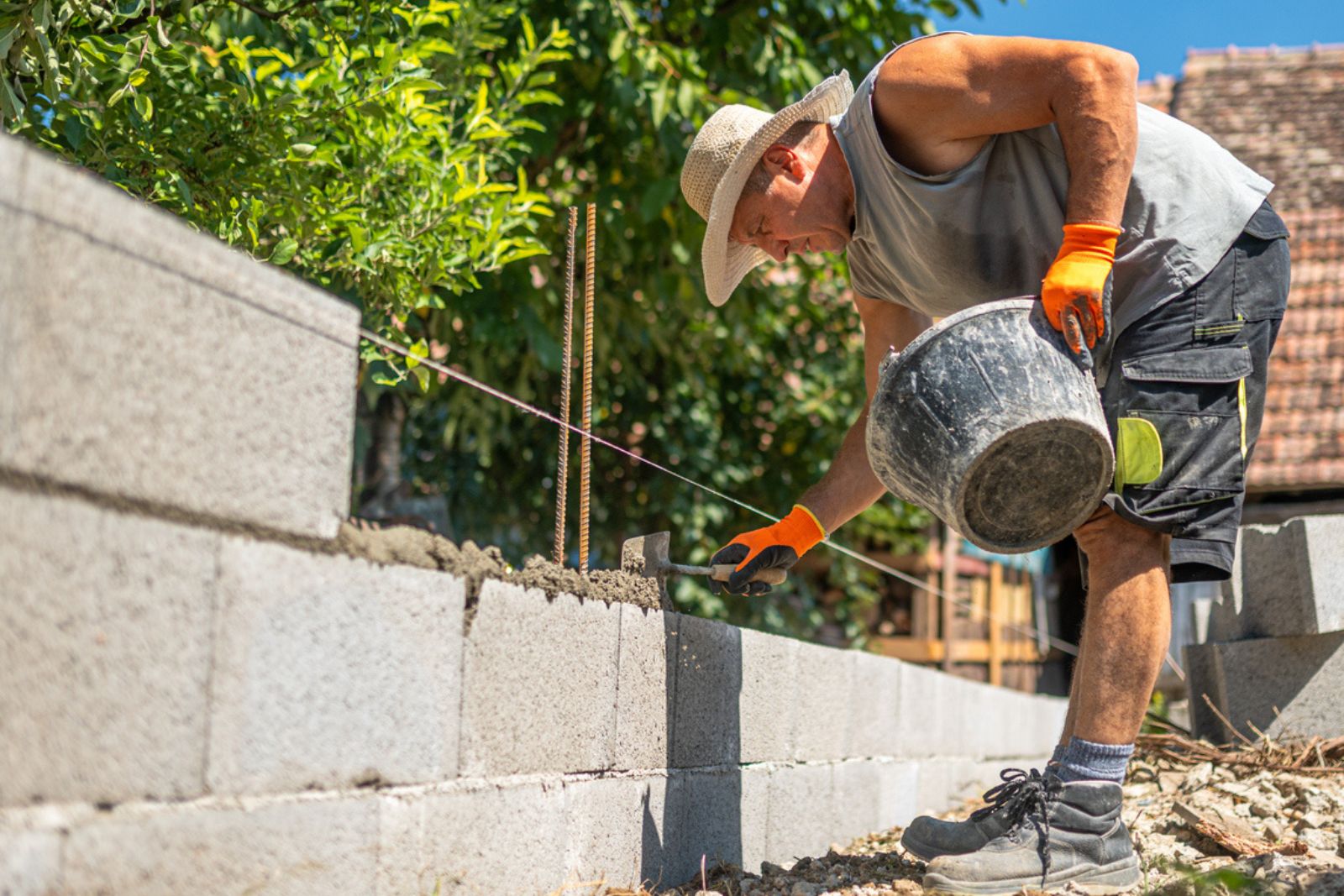
The slope behind the house has been a problem for years. The mower can’t handle it, the soil washes onto the sidewalk after every storm, and the quotes you got all showed the same thing: a straight gray wall of concrete block that would make the yard look like a parking lot.
This is not your fault. Block walls are what most people picture when they hear “retaining wall.” But natural boulders do the same job with a softer look, and many landscapers offer them for hillsides. Mountain Excavating, a contractor in Pisgah Forest, North Carolina, notes that dry-stacked boulders allow water to pass through naturally, and McDowell Landscapes says boulder walls look more natural and handle large, tall walls very well. Block still has its place: McDowell adds that it gives a cleaner, more structured look and works well in tight spaces. Here are 10 real sloped yards where boulders do the holding.
1. A pollinator hillside in Canonsburg, Pennsylvania
Bedner’s Farm & Greenhouse set large natural boulders at the base of an underused backyard slope, on compacted gravel for stability, creating a new planting bed above. The homeowner wanted color without extra maintenance, so the bed is filled with perennials that bloom in succession, including catmint, coneflowers, asters, butterfly weed and little bluestem. The design kept at least 4 feet of clearance around the house for mowing.
2. A terraced front yard in St. Paul, Minnesota
This front yard was a weedy hillside eroding onto the sidewalk and too steep to mow. Southview Design regraded it into stepped terraces with gardens between the walls, using Gray Trap and granite boulders that each weighed roughly 700 to 1,200 pounds. The base course was buried to half the boulder height, with landscape fabric and gravel behind the wall for drainage. Shade-tolerant hostas and lady’s mantle fill the lower garden.
3. Two tiers, spiral steps and lighting
Cider Mill Landscapes, based in Garnet Valley, Pennsylvania, tackled a steep hillside a client had struggled with for years. The crew built a custom two-tiered boulder wall totaling almost 8 feet in height, with natural stone steps spiraling up to a back entrance. The wall made room for a new 20-by-20-foot parking area, and low-voltage LED lights along the steps and on the stone add nighttime safety.
4. Two boulder walls with a stone walkway between them
R&A Lawn and Landscape, a Minnesota company, turned an eroding hillside it describes as basically unusable space into a garden with two retaining walls of natural field boulders. A natural stone walkway runs between the walls, spruce trees anchor the upper terrace, and a seating area sits in front of the boulder wall.
5. Bigger boulders replace a do-it-yourself wall
In San Francisco’s St. Francis Woods neighborhood, a homeowner had built a boulder wall himself with stones that were too small, and it looked worn. Tamate Landscaping removed it and set multi-ton boulders along the hillside with a rented telehandler. A dry creek of river rock and crushed granite, laid over wire mesh to deter gophers, and plantings such as a serpentine weeping blue Atlas cedar and mugo pine complete the yard.
6. A steep side yard along the garage
In Eagan, Minnesota, Pahl’s Landscaping cleared a debris-filled hillside beside a garage and built two fieldstone boulder walls, one about 55 feet long and 4 feet high, the other about 30 feet long and 1.5 feet high. The boulders, 18 to 24 inches and around 450 pounds each, were each set slightly back from the one below for stability. Three cut fieldstone steps and a flagstone paver walkway make the slope walkable.
7. Boulders replace a failing timber wall by the pool
Near Cannon Falls, Minnesota, the timber wall around an aging pool had started to give way. Working with Boulder Images Inc., the homeowners replaced it with natural boulders, chosen for durability. Planting pockets built into the wall soften the stone and help it blend into the landscape.
8. Sandstone terraces in Highland, Utah
All States Landscaping faced a steep grade between an upper pool deck and a lower lawn at a new modern farmhouse. Its answer was multi-tier natural sandstone boulder walls, reaching about 6 feet in sections, with engineered drainage behind them. The terraces were backfilled and graded into usable flat areas, and the wall tiers are planted with shrubs, perennials and groundcover.
9. An eroding slope held in place in Northern Michigan
Keller Caretaking, a Harbor Springs, Michigan, firm, worked on a slope with no wall at all and visible erosion and grade problems. The crew built a natural stone retaining wall to hold the grade and define the space, then added plantings to connect the wall to the surrounding yard.
10. A boulder wall with rock beds in Minnesota
LN Landscaping, based in North Branch, Minnesota, used a boulder retaining wall to support a sloped area and built natural boulder accents into the rest of the design. Decorative rock beds and stone borders around the foundation keep the look consistent from the wall to the house.
Before you build
Boulder walls are heavy work, and several of these projects needed equipment such as skid loaders or telehandlers. The base matters most: Mountain Excavating starts with an excavated trench, a compacted layer of crushed stone or gravel, and drainage gravel and fabric behind the boulders, and warns that poor base prep leads to shifting and leaning over time.
Height also changes the rules. Mountain Excavating notes that walls under about 4 feet generally don’t need a permit, while taller walls, or those that affect stormwater flow, may require engineering or county approval. Requirements vary by town, so check locally before you start. Budget accordingly, too: Mountain Excavating estimates about $3,000 to $5,000 for a small wall around 3 feet by 20 feet, and $7,000 to $12,000 for a medium one around 4 feet by 40 feet, depending on boulder size, transport and site access. For more ways to work with a hill instead of against it, these sloped garden ideas include boulder walls and stone terraces. Set the big stones low, give the water a way out and plant the pockets. That’s the trick.
The post Goodbye to Concrete Block Retaining Walls: 10 Sloped Yards Held Up by Natural Boulders appeared first on Trendir.