

Storm windows are expensive and plastic film looks like you gave up. The good news: the right curtain or blind setup does most of the same work, and it looks like decorating instead of weatherproofing. These 15 windows show you exactly how people are pulling it off.
15 Winter Draft Fixes That Look Like Regular Window Treatments
Cold air doesn’t just sneak in through cracks. It falls off the glass itself, slides down the wall, and pools around your feet, which is why the room feels drafty even when nothing’s technically leaking. The fix is a physical barrier close to the window that traps air before it can move.
Curtains that hang floor to ceiling, thick pinch-pleat drapes, cellular blinds with those little honeycomb pockets: all of it works on the same principle. Here’s how it plays out in real rooms.
The Bifold Door Fix Everyone Skips
Bifold doors are the worst cold spot in most kitchens because it’s just glass, top to bottom, with almost no wall around it. Full-length curtains mounted above the frame and puddling slightly at the floor block the cold air before it hits the tile. The heavier the fabric weight, the better it works, and pulling them across at night is the single biggest heat-loss fix most kitchens are missing.
Two Layers Beat One Every Time
The cornice board on top plus cellular shade plus side drapes isn’t just a look. Each layer traps another pocket of still air, and still air is what actually insulates. If you have one drafty window that keeps making the dining room feel cold, this stacked setup does more than any single treatment ever will. The cornice is what stops warm air from escaping over the top of the shade.
Cellular Shades Do the Quiet Heavy Lifting
Those little honeycomb pockets you see in the fabric aren’t decorative, they’re air chambers, and they’re what makes cellular shades the closest thing to a storm window that doesn’t look like weatherproofing. Pair them with floor-length curtains on either side and you’ve built a two-layer barrier that reads as regular decorating. Great option if you rent and can’t touch the actual windows.
Cellular Shades Down to the Sill
Wide windows behind the couch are usually where you feel the cold first in a living room because there’s so much glass and nothing to block it. Cellular shades pulled all the way down create a solid barrier of trapped air right up against the pane. The wood floors and heavy furniture help too, but the shades are what actually stop the draft from crawling down onto the couch.
Ceiling-Mount Trick for Old Houses
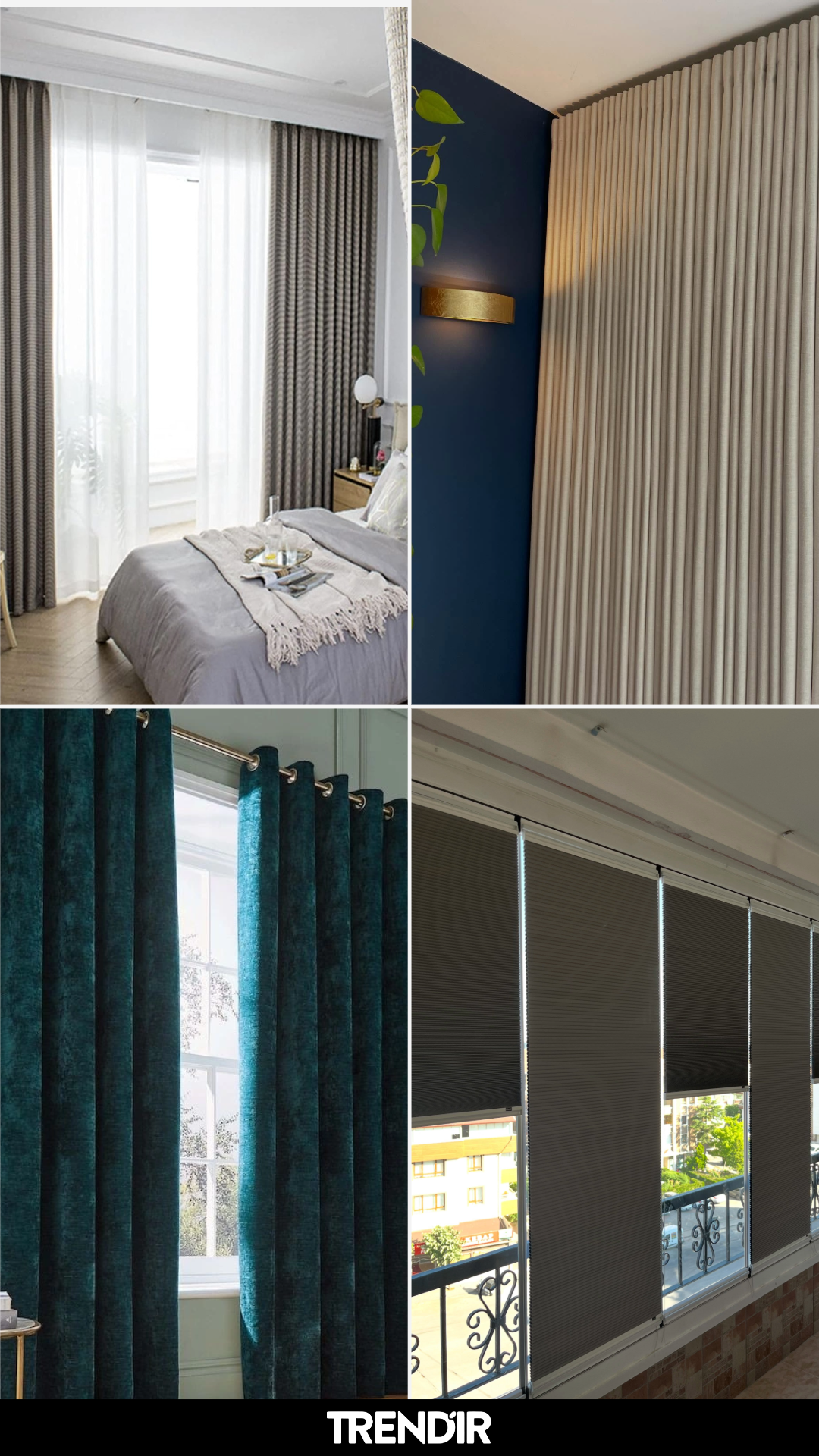
Older homes with tall ceilings leak heat straight up, and standard curtain rods leave a gap at the top where warm air escapes. Mount the track flush to the ceiling and hang the curtain all the way to the floor, and you’ve turned the whole wall into an insulating layer. The linen-look fabric is thick enough to matter without looking like a heavy velvet drape.
Blackout Curtains Are Draft Curtains in Disguise
Blackout curtains get talked about for sleep, but the real reason they work in winter is the weight of the fabric. The lining is dense enough to stop cold air moving through it, and hung wall-to-wall like this, they close off the whole window as one unit. Add a sheer layer inside for daytime and you’ve got warmth at night and light in the morning.
The Cellular Shade Everyone’s Buying for Kids’ Rooms
Kids’ rooms tend to be the coldest rooms in the house because they’re often on outer walls with more window per square foot. A blackout cellular shade like this handles the light and the draft at the same time, which matters for winter naps. The honeycomb build is what makes it warmer than a regular roller blind of the same thickness.
Top-Down Bottom-Up Solves the Privacy Problem
The two-layer cellular here lets you drop the top down for light or pull the bottom up for privacy, and both positions still keep the honeycomb between you and the glass. Good move if you have neighbors close by and don’t want to choose between warmth and daylight. Works especially well on bay windows or ground-floor rooms.
Cellular Shade Plus Sheer Is a Sneaky Combo
The cellular shade behind and the sheer curtain in front look like light-control decisions, but that gap of air between the two layers is where the real insulation happens. Trapped air doesn’t move, and air that doesn’t move doesn’t carry heat away. This setup is the cheapest way to double up on a single window without buying heavy drapes.
Wall-to-Wall Cellular for a Whole Room of Windows
When you have a whole wall of windows like this, treating them one by one leaves cold gaps between each unit. Running cellular shades edge to edge across the whole run seals the wall as one insulated surface. Dark fabric absorbs whatever winter sun you get through the day, which adds a little passive warmth on top of the draft-blocking.
Layered Silk Curtains on a Bay Window
Bay windows lose more heat than any other window shape because you’ve got three walls of glass instead of one. Full pinch-pleat curtains on each pane, pulled across at night, split the bay into three insulated pockets instead of one big cold zone. Silk-look fabric holds pleat shape all winter, which matters when curtains are drawn most evenings.
Ceiling-High Drapes for Rentals With Awful Windows
If you’re in a rental with cheap single-pane windows, this is the move: floor-to-ceiling drapes across the whole wall, hung from a track close to the ceiling. It doesn’t fix the windows but it puts a heavy insulating layer between the glass and the rest of the room. The way the fabric extends past the window on both sides is what keeps cold air from sneaking around the edges.
Pinch Pleat Curtains Do More Than Look Good
Pinch pleats aren’t just a style choice, they hold the fabric in deep folds that trap air along the entire length of the curtain. That’s why proper pinch-pleat drapes feel warmer than the same weight fabric hung flat. Herringbone weave adds another layer of thickness on top of that, which is why this kind of curtain shows up in older, colder homes.
Heavy Chenille Curtains for the Coldest Room
Chenille is the fuzzy, dense fabric you feel when you push your hand into it, and that thickness is exactly what stops cold air. Grommet-top curtains in a heavy chenille like this teal work best in bedrooms and living rooms where you want the warmth without ceiling-mount hardware. Drawn at dusk, this kind of curtain can drop the felt temperature at the window by several degrees.
Roller Blind Plus Sheer for Small Bedrooms
Small bedrooms with one or two windows don’t need heavy drapes to feel warmer, they need the air near the glass to stay still. A roller blind pulled down at night plus a sheer curtain in front creates two barriers with an insulating gap between them. It’s the setup that gives you both light and draft control without making the room feel closed in during the day.
Which of these window setups sounds closest to what you’re dealing with this winter?
The post 15 Window Treatments That Secretly Keep Winter Drafts From Creeping In appeared first on Trendir.