

She adds the same imperfect thing to every room, and her home looks more expensive than anyone’s
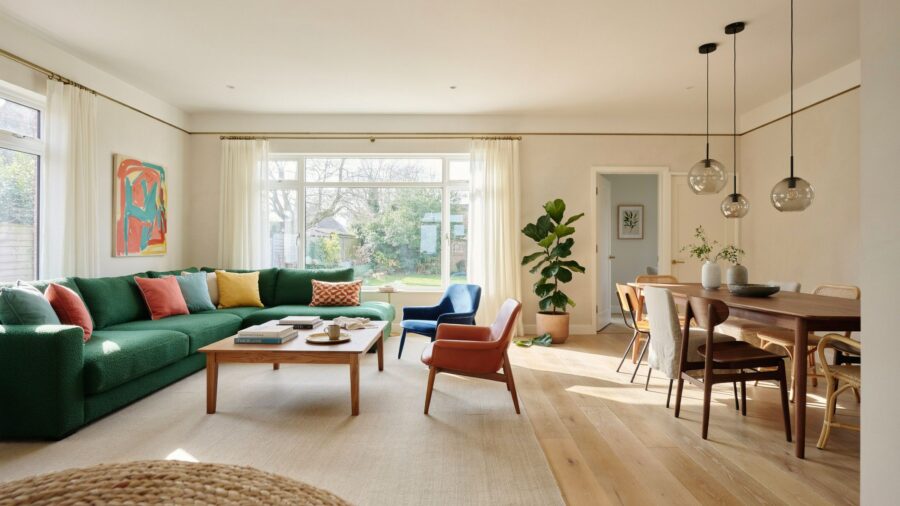
You’ve seen the friend. Or the account you keep going back to. Or the neighbor whose place you can’t stop thinking about. Their rooms are almost bare. A wood coffee table. One tall plant. A cream sofa. Nothing extra. And somehow the whole place looks like it cost three times what it did.
You’ve tried the same thing. Cleared the surfaces. Bought the wood side table. Dropped a big plant in the corner like every blog said. And your room still feels like a hotel lobby on a slow Tuesday. Clean. Cold. A little empty.
The weird part is, it isn’t a money thing. Her sofa isn’t secretly a $6,000 sofa. Her plant isn’t rare. She isn’t a designer. She’s doing one small thing you’re not, in every single room. Once you notice it, you can’t unsee it in any expensive-looking home online.
What every “warm up your minimalist room” guide leaves out
The usual advice isn’t wrong. Add wood. Add greenery. Layer some texture. That’s about as far as most Pinterest posts go, and it does fix the first layer of the problem: a room that feels sterile because there’s nothing living or natural in it.
But it stops there. So people do everything they were told and the room still looks like a furniture store on move-in day. Everything’s new. Everything’s clean. Every corner is sharp. Nothing has been touched by anyone.
You can feel it when you walk in, even if you can’t name it. Something about the room reads set up instead of lived in. You’ve probably moved the plant. Added a candle. Rearranged the throw pillows. Nothing works, because you keep adding more of the same thing that already isn’t landing.
Meanwhile the rooms you actually screenshot, on the covers of design magazines and pinned on every “quiet luxury” board, are all doing something the guides never spell out.
Where this really comes from
The look isn’t new. It’s a very old idea with two names your friend has probably heard.
The first is wabi-sabi, a Japanese way of looking at beauty that goes back to the 1500s. It started in the old tea ceremonies, where the tea masters picked simple, worn, slightly-off pots and cups on purpose. In 1994 an American writer named Leonard Koren wrote the book that brought the whole idea to the West, and one line sums it up: “a beauty of things imperfect, unfinished, and past their prime.” He also wrote: “Strip it down to what’s needed, but don’t take the soul out of it.”
That second line is the whole game. Minimalism, the way most people do it, strips things down and stops. Wabi-sabi strips things down, then puts one thing back in on purpose. Something with a crack, a lean, a mend, or a mark. Something clearly touched by a hand or by time.
The second name is quiet luxury, which is what Western magazines are calling the same idea right now. Open Homes & Gardens or Elle Decor this month and you’ll see it everywhere. Every designer they talk to lands in the same place: real materials, family hand-me-downs, handmade pottery, and a “lived-in feel” that store-bought stuff can’t fake. The most famous person doing it is a Belgian antiques dealer named Axel Vervoordt, who has spent fifty years saying that age and wear on an object isn’t damage. It’s history. He lives in a castle from the year 1108 and calls the old, worn walls “like modern art.”
His style is what a lot of the “warm minimalism” trend on Instagram is quietly copying. And what he does over and over is what your friend is doing in every room.
So if the answer has been sitting inside a look photographed for thirty years, why does almost nobody at home do it? Because it sounds backwards. You just spent money on a clean, new room. Nobody wants to hear the fix is something old, cracked, or worn. But that’s it.
What’s actually going wrong in your room
Your room isn’t missing more stuff. It’s missing anything that looks touched by a human.
Everything you added, the table, the plant, the throw pillows, was made in a factory yesterday. Smooth edges. Even colors. Perfect symmetry. When your eye scans the room, nothing stops it, because nothing surprises it. It slides across all that new, uniform surface and out the window. That’s the “furniture store” feeling: not too little, but too uniform.
The rooms you keep screenshotting break that uniformity on purpose. One small, imperfect, clearly-handmade or clearly-old object sits inside all the clean, new stuff. That single piece becomes the thing your eye lands on, and everything else in the room turns into a quiet backdrop for it.
The fix
She’s adding one imperfect, handmade thing per spot. That’s the whole move.
Not a whole imperfect look. Not a pile of them stacked together. One. Per spot. A spot being a coffee table, a shelf, an entryway console, the corner with the chair, the space next to the bed. One clearly hand-touched, aged, or slightly-off object in each place, sitting next to all the clean new stuff.
The second you drop a small bowl with a lopsided rim, or a wood cutting board with a real crack, or a folded old cloth with visible mending, your eye lands on that spot and stays. Your brain notices the thing that doesn’t match. The crack, the mend, the wobble becomes the anchor. The whole room suddenly reads as thought-out instead of bare.
And the wildest part: this stuff is almost always cheaper than the brand-new version you were about to buy. Hand-thrown Etsy pottery, thrifted wood, small vintage rugs, mended textiles: most of it lands between $10 and $80 per piece (about €9 to €75). You aren’t buying luxury. You’re buying proof that a human hand made it and proof that time has passed on it. A factory literally can’t fake either, and your eye reads both as rare, which is the same thing it reads as expensive.
How to do it this weekend
Count your spots. Coffee table, kitchen counter, entryway, nightstand, bathroom counter, living room shelf. Most homes have five to eight. Add one piece to each over time, not all in one weekend. Realistic total for three or four spots: $60 to $300 (about €55 to €275).
What to grab:
A hand-thrown ceramic bowl, vase, or small plate. On Etsy, search “hand-thrown” or “wheel-thrown.” Skip anything perfectly even or sold as a set. You want the wobbly rim, the finger marks, the glaze that ran on one side. Put it out by itself.
An old wooden object. Cutting board with a crack, mortar, small stool, plain box. Thrift stores and eBay beat Etsy on price. Look for a soft oiled finish, not shiny lacquer.
A vintage cloth with mending or age. A small Turkish rug at the foot of the bed. A folded indigo quilt over a chair. A pillow cover from an old grain sack, sun-faded. The repair and un-matching corners are the whole point.
One live plant that’s grown a little weird. Not a fresh nursery plant with every leaf the same. An older one with a trailing vine, or a bend where it stretched toward the light.
Two rules. Only one per spot, because two imperfect things on the same table cancel each other out. And don’t fake it. Distressed-look furniture from a chain store isn’t the same, and your eye can tell.
Sources: (1) Leonard Koren, Wabi-Sabi: for Artists, Designers, Poets & Philosophers; (2) Design & Build Review, “Wabi-sabi in Interior Design: The Art of the Imperfect”; (3) Domus, “Wabi-sabi: why the design of imperfection fascinates Western culture”; (4) Design Dash, “What is Quiet Luxury Interior Design”; (5) Studio Henree, “Quiet Luxury On The West Coast”; (6) Interiors & Icons, “Axel Vervoordt”; (7) Amity Worrel, “Belgian Interior Design Style and Axel Vervoordt Influence”; (8) Etsy vintage Turkish rug listings.
The post She adds the same imperfect thing to every room, and her home looks more expensive than anyone’s appeared first on Trendir.