

Your darkest room could become your brightest using the daylight you already have: here’s how
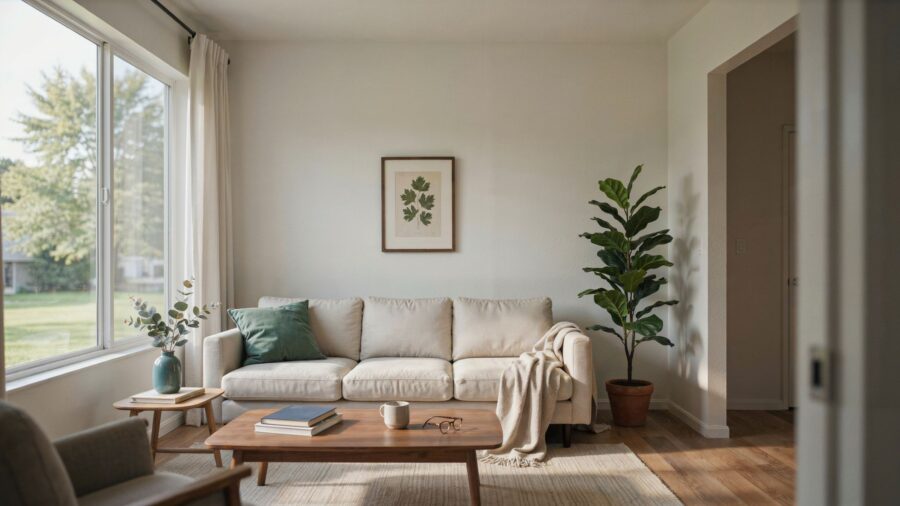
You’ve bought the daylight bulbs. You’ve painted a wall a lighter color. You’ve probably hung a mirror somewhere too, because every home account online swears mirrors brighten a dark room. And your room is still stubbornly dim at 3 p.m.
You’ve noticed the pattern by now. The room feels dark not just in winter, not just on cloudy days, but on bright afternoons too. Something’s off, and none of the usual fixes have moved the needle.
The part that’s going to sting a little: the daylight you need is already coming into your room. The bulbs aren’t the problem. The paint isn’t the problem. You’re losing most of that free daylight to a few small, ordinary things sitting in your room right now, and once you know what they are, you can flip the whole room in an afternoon without spending a dollar.
None of the fixes below need a store run. None of them take more than 15 minutes. And the biggest one, the one designers barely talk about because it makes popular internet advice sound plain wrong, is a single thing almost every home already owns, hung on the exact wall that guarantees it can’t do its job.
Start with what’s eating your daylight
The first thing to check is the window itself. Not the size. The glass.
Windows are the one part of the house nobody thinks to clean for light reasons. We clean them when they look bad, when someone’s coming over, when spring rolls around. Nobody thinks of a dirty window as a lighting problem, but that’s exactly what it is. According to window maker Pella, how clean a window is directly affects how much light gets into your home, and when the glass isn’t clean, less light comes in and the room ends up looking dark and dingy. The buildup that does this is invisible until you compare a cleaned pane to a dirty one: pollen, cooking film on the inside, mineral spots from rain on the outside, a slow layer of dust that your eyes get used to and stop noticing.
You’re not looking through your window. You’re looking through a filter you didn’t ask for.
Wipe the glass on both sides, then stand back. The room gets noticeably brighter at the same time of day, with the same bulbs, on the same cloudy afternoon. That’s your first free upgrade. But it isn’t the biggest one.
Then check what’s crowding the light
Now look at your windowsill.
A row of framed photos. A trailing plant. A stack of books. A candle you forgot about. Maybe a small speaker, a phone charger, a coffee mug that never made it back to the kitchen. Now look at the curtains: heavy fabric hanging on either side of the frame, even when they’re supposedly “pushed open.”
Every one of those things is blocking daylight before it even reaches the room. The sill is a bottleneck. Anything sitting within about 6 inches (15 cm) of the glass casts a shadow the length of the whole room during peak sun hours, and heavy drape folds soak up light even when the drapes are open. If your window has thick blackout curtains for nighttime that never get swapped out during the day, you’re basically framing your window in a light sponge.
Clear the sill. Move anything that lives in the light path. Second free upgrade. Still not the biggest one.
The one thing you haven’t looked at yet
By now you’ve cleaned the glass and cleared the sill and the room feels a little better. Not fixed. Just a little better. Which tells you the biggest problem isn’t the window at all. It’s somewhere else in the room, sitting in plain sight, doing exactly the opposite of what you were told it would do.
Take a slow look around. The couch didn’t cause this. The rug didn’t cause this. The lamp isn’t the villain. But one object in your room is quietly the reason your afternoons still feel gloomy, and almost every home article you’ve read has told you to hang it exactly where you hung it.
Now the mirror. This is where it gets uncomfortable.
You’ve probably heard the advice a hundred times: hang a mirror on the wall across from a window and it’ll brighten a dark room. It’s the most repeated home tip on the internet. Every home account, every design guide, every well-meaning aunt.
You did it. The mirror is up. The room is still dark.
You’ve probably second-guessed yourself. Wrong size? Wrong height? Maybe you need a bigger mirror. Maybe two.
None of those things are the problem. The mirror is fine. What went wrong is which wall you picked. And the reason that choice matters isn’t a design opinion. It’s basic physics almost no one bothers to explain.
The rule almost no one thinks about
Light bounces off a mirror at the same angle it hits it. It’s one of the oldest rules in physics: the angle light comes in at (the angle of incidence) equals the angle it bounces off at (the angle of reflection). A mirror doesn’t make light. It just redirects it, based entirely on the angle it’s hung at.
Picture your living room. Daylight comes in the window and hits a mirror hung straight across from it. That mirror sends most of the light right back where it came from: the window. It’s a bright, dramatic reflection, which is why the trick keeps getting recommended: it doubles the view. But the light isn’t going into your room. It’s heading back out the way it came, and the dark corners are getting almost none of it.
Designers actually make this call. Country Living spells it out plainly: place a mirror either directly across from a window, giving your space the feel of a second window, or on the wall next to it (at a right angle), so you can bounce more light across a bigger part of the room. Across from the window: pretty second-window look. On the side wall: daylight actually spreads across the room.
Design site Edward Martin adds that hanging mirrors on a side wall catches light coming in from the side and pushes it deeper into the room, brightening dim corners, which works especially well in softly lit, north-facing rooms. When the mirror sits next to the window, daylight hits it at an angle and shoots across the room, landing high on the far wall and the ceiling. Ceilings are almost always white, so they scatter that light everywhere. Your window turns into soft, all-over light instead of a beam that dies at the sill.
Do this today (free, about 20 minutes)
1. Take the mirror down from the wall across from your window.
2. Rehang it on the wall next to the window (the side wall). Line up the middle of the mirror with the middle of the window’s height. Stand at the mirror: you should see the window at an angle in the glass, not head-on. If you see it head-on, wrong wall.
3. Clean the glass, both sides. A lint-free cloth and diluted vinegar works fine.
4. Clear the sill. Anything within 6 inches (15 cm) of the glass eats your daylight.
5. Fix the drapes. Pull them fully behind the frame during the day, or swap heavy ones for linen, sheer, or thin cotton.
You’re not adding light. You’re stopping the light you have from being wasted.
Sources: (1) Britannica, Law of reflection; (2) Country Living, This one designer-approved decorating trick makes any room look brighter; (3) Edward Martin, What’s the art of placing mirrors to maximize light?; (4) Pella, 5 Benefits of Window Cleaning.
The post Your darkest room could become your brightest using the daylight you already have: here’s how appeared first on Trendir.