

Hotel towels feel plush for years and yours don’t: here’s what almost everyone does wrong
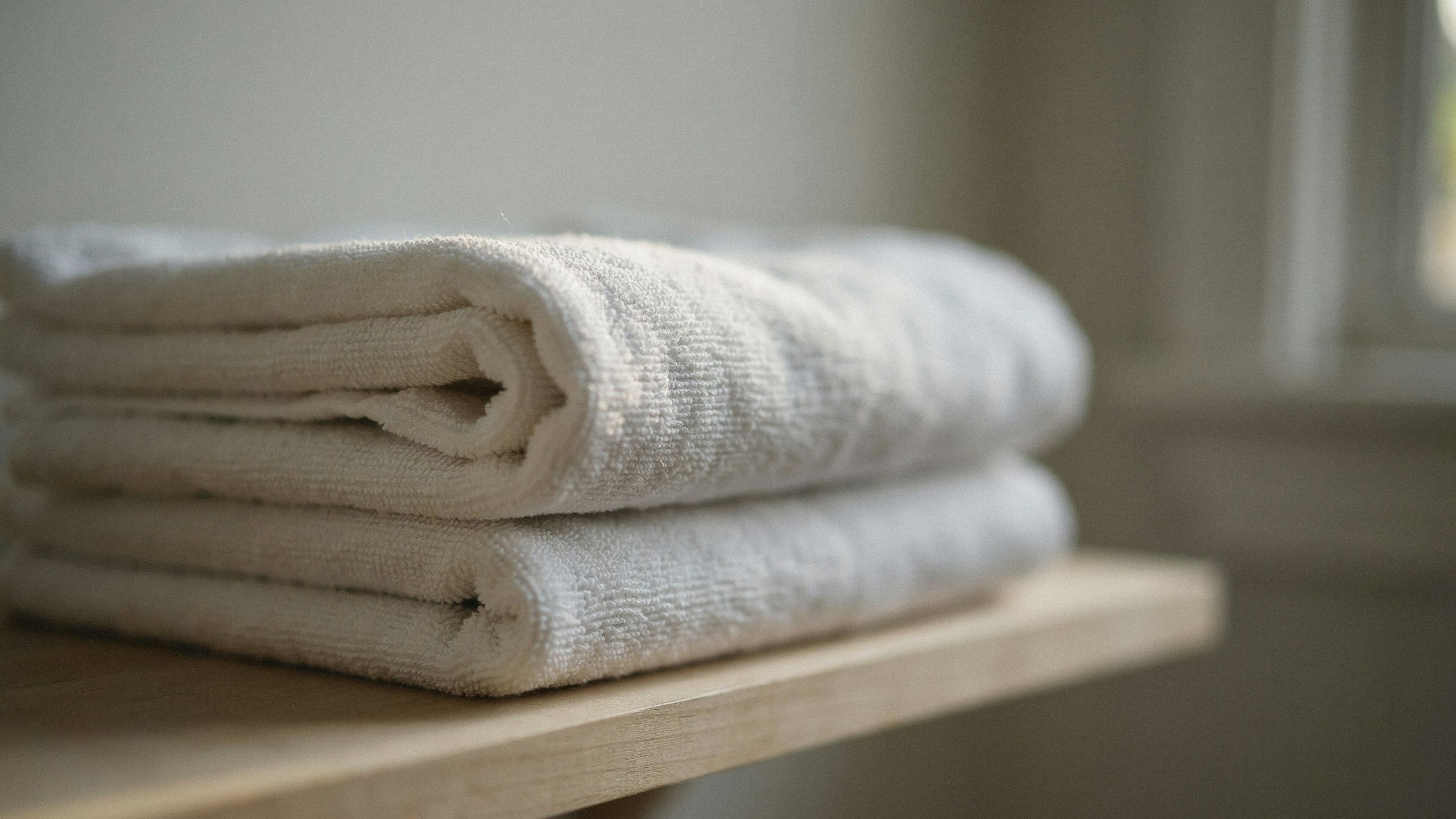
You keep the good towels folded in the linen closet for guests. You dry off with the old scratchy ones every morning. It feels responsible. But pull the good ones down for a weekend visitor, and if they feel a little flat, a little slick, less thirsty than the day you bought them, that’s not your imagination. Something you do every single wash is aging them right alongside the daily ones, even though they barely get used.
And the maddening part is that most people are doing what feels like the nice thing. The routine feels like care. It isn’t.
Meanwhile, a hotel bath towel gets washed hundreds of times and still lands on you like a warm cloud. That gap isn’t about towel quality. Your towels are probably fine. It’s about what happens in your laundry room that doesn’t happen in theirs.
Your good towels are aging faster than you think
The numbers are not gentle. In lab testing measured by a standard the industry uses, ordinary home-washed cotton towels lost up to 38% of their water-holding ability after just ten washes, and other tests have measured drops as high as 50% over time. Your towel isn’t drying you off anymore. It’s pushing water around your skin.
A study by researcher Anne Buisson, covered by ScienceDaily, found that tiny cracks form inside the cotton fibers themselves during a normal laundry routine, and those cracks can weaken the fabric by 25 percent or more. That fluff filling up your dryer lint trap? It’s your towel, breaking off piece by piece.
It gets worse the longer you keep at it. A separate study ran cotton towels through just 20 normal cycles and the fabric had already lost half its strength, making it twice as easy to tear as when it started.
Read that back. Your everyday towels didn’t just wear out. Your guest towels are on the exact same clock. They just get washed less, so it takes longer to show.
The good news: your towels are fine, your routine isn’t
A bath towel is thousands of tiny loops of cotton yarn standing upright off a woven base. Those loops soak up water when they stand tall and springy. Two things kill that feel. One coats the loops so water can’t get in. The other snaps the loops so they can’t stand back up.
In a normal American laundry setup, both happen on the same load, back to back. And you probably didn’t know either one was happening, because the products doing the damage are the ones marketed to help.
What’s actually going wrong
It’s one mistake with two moving parts that make each other worse.
Part one is the fabric softener. The liquid softener in your dispenser and the dryer sheets in the box next to it work the same way. They leave a thin, waxy film on your fabric. That film is what makes clothes feel silky when they come out of the dryer. On a t-shirt, no problem. On a towel, disaster. The Turkish Towel Company puts it plainly: the coating repels water, so you’ve basically waterproofed your towel, and every wash lays down another layer. Instead of soaking up water off your skin, your towel now slides it around.
Part two is the heat. After coating the towel in that waxy film, most people send it into the dryer on high, because the setting says “cotton” or “towels” and that sounds right. It isn’t. Cotton towel maker MATTEO explains what happens at those temperatures: drying at 180°F (82°C) or above damages the cotton itself, so the fibers turn brittle and snap, and broken fibers can’t pull water inward anymore.
Put the two together and you get a towel whose surface is sealed against water AND whose fibers are cracking. Every wash is a double hit. Guest towel or daily towel, it doesn’t matter which one is in the load. If you read that and thought that’s basically my routine, you’re not alone. It’s the default American laundry setup. Nobody taught most of us any different.
The fix, step by step
Do these on your next towel load. Total time added: under a minute. Total cost: less than what you’re spending now.
Skip the fabric softener and dryer sheet completely on any load with towels in it. Just leave them out. This alone does most of the work.
In the softener dispenser slot, pour half a cup (about 120 ml) of plain distilled white vinegar instead. It has to be distilled white vinegar, not apple cider. Apple cider has sugars and colors in it that can stain fabric and grow mold in your machine seals. The dispenser will release the vinegar during the rinse cycle, which is when you want it. It’s a mild acid, so it quietly dissolves the waxy softener buildup from all your past washes and leaves the pile fluffy again. Don’t add it to the main wash, because it will cancel out your detergent (detergent needs the water to stay on the soapy side to clean properly, and vinegar throws that off).
Do this every third or fourth towel load, not every single one. Industry testing found that towels rinsed with vinegar every fourth load kept 92% of their original absorbency after 100 washes, versus only 76% for towels that got vinegar every single load. So more isn’t better. Too much acid, too often, will slowly eat the cotton itself.
Turn your dryer down to low or medium heat. Never high, on any load with towels. It’s a five-second dial change. And if you can pull the towels out while they’re just barely dry, instead of fully baked and crispy, that’s even better for the fibers.
Toss two or three wool dryer balls in with the load. They last for years, they fluff up the towel loops as the load tumbles (which is the effect the softener was faking), and they cut drying time, so your towels spend less time in the heat.
One safety warning that matters: never mix vinegar with chlorine bleach in the same cycle. The combination gives off chlorine gas, which is toxic. If you use bleach on your white towels, run it in a separate load.
What this costs
A gallon (about 3.8 liters) of distilled white vinegar runs three or four dollars (roughly €3 to €4) and lasts most homes months. Wool dryer balls are a one-time buy, around ten to fifteen dollars (roughly €9 to €14). And you stop buying fabric softener and dryer sheets, which usually cost more per year than both of those combined. The fix actually saves you money while it saves the towels you already own.
Sources: (1) ScienceDaily on the Anne Buisson cotton drying study; (2) MATTEO 100% Cotton Towel Care Guide; (3) Classic Turkish Towels on fabric softener and absorbency; (4) Cotton With Love, how to wash towels; (5) LifeTips / Alibaba, vinegar for towels evidence review; (6) LifeTips / Alibaba, what fabric softener actually does; (7) Absolute Appliances Repair, cotton strength loss over dryer cycles; (8) Truly Free Home on fabric softener and towels.
The post Hotel towels feel plush for years and yours don’t: here’s what almost everyone does wrong appeared first on Trendir.