

Warning: one thing on your property is quietly telling raccoons your home is worth visiting
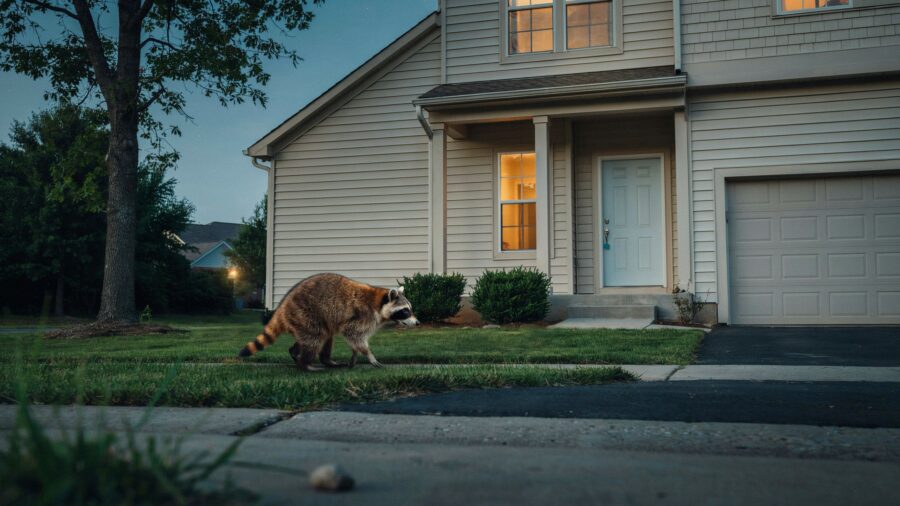
You lock the front door. You set the alarm. You check the garage. And every night, without knowing it, you might be leaving one thing out in your yard that quietly says come check this place out to one of the most disease-carrying animals in North America.
It’s not your bird feeder. It’s not a doggy door. It’s not something you’d think of as an invitation at all. It’s something almost every American home has, in almost the exact same spot, and nobody talks about it as a wildlife problem. So it just sits there, night after night, working against you.
And once one raccoon figures out your address is worth the trip, others follow.
Why this is worth two more minutes of your night
Before we get to what the thing is, it’s worth knowing what you’re inviting when raccoons keep coming back.
According to the Centers for Disease Control and Prevention (CDC), raccoons are one of the main wildlife carriers of rabies in the United States, along with skunks, bats, and foxes. [1] Raccoons are behind about 30 percent of reported U.S. rabies cases every year. They also carry a parasite called raccoon roundworm (the scientific name is Baylisascaris procyonis). An infected raccoon can shed about 20,000 roundworm eggs in a single gram of poop, according to research shared through the National Institutes of Health. [2] Those eggs can stay dangerous in the soil for weeks. Young kids, who touch dirt and then put their hands in their mouths, are the group most at risk.
The CDC also warns about leptospirosis, a bacterial infection that people and pets can catch from raccoon urine. [1] And raccoons carry fleas, ticks, and mites that don’t stay on the raccoon once it wanders off your yard.
Raccoons don’t wander randomly. They target.
This is the part most homeowners don’t realize.
Raccoons aren’t wandering your neighborhood on luck. They’re creatures of habit with sharp memories. Once one finds a house that reliably gives it what it wants, it comes back. Then it teaches its babies the route. Then it starts using a spot on your property as its bathroom (wildlife biologists call this a latrine), which draws in even more raccoons. That’s the loop.
Purdue University Extension puts it plainly: the best way to protect your family, pets, and property from raccoon-carried disease is to give raccoons a reason to stop coming over, and you do that by getting rid of the thing pulling them in. [3] The University of Maryland Extension and the University of Nebraska Extension give the same advice: cut off what’s drawing them in, and the visits stop. [4][5]
So what’s the thing pulling them in on almost every American property? What’s the signal you’re leaving out that says this address is worth coming back to?
The signal you’re leaving in plain sight
Wildlife biologists have a name for what raccoons do at 2 a.m.: they build a food map of the neighborhood. Each home is either worth the trip or not, and raccoons make that call from the edge of your property, often from the street, without ever setting a paw on your lawn.
What gets a house tagged as worth the trip comes down to two things a raccoon picks up from a distance. First, a smell strong enough to promise food. Second, something they can see from far off that backs up the smell.
Both signals, on most American properties, come from the same object. And the object is so ordinary that most homeowners walk past it every single day without ever thinking of it as a wildlife problem.
The UF/IFAS Extension in Florida notes that this one object gives raccoons and rats all three things they’re hunting for at once: food, water, and a place to hide. And the biggest mistake homeowners make, per UF/IFAS, is placing it right next to the house or an outside door, where animals can use it as a stepping stone toward the home itself. [6]
The signal is your outdoor trash, recycling, and yard-waste bins, sitting out in the open along the side of the driveway or side yard, visible from the street, lids sitting a little loose, staying there all night long.
To a raccoon walking the block, that lineup is a lit-up storefront. Bright plastic, easy to spot from far off, close to a wall it can hide against, and full of smells it picks up from about 40 feet (12 meters) away.
And the kicker most people miss: those bins in the open aren’t just a wildlife problem. They’re a curb-appeal problem too. The National Association of Realtors reports that 92 percent of Realtors tell sellers to fix curb appeal before listing, and good curb appeal is tied to sale prices about 7 percent higher on average, per research in The Journal of Real Estate Finance and Economics. [7] Many HOAs write the rule right into their rulebook: bins can’t be visible from the street, with fines for repeat offenders. [8]
Same object. Two problems. One fix.
The fix: a slatted bin corral
You build (or buy) a slatted bin corral: a small three-sided screen or box, wood or composite, big enough to hold your trash, recycling, and yard-waste bins side by side, hidden from street view, with a hinged lid or open top so you can toss bags in without opening a door.
The slats are the key. A solid-panel box traps moisture and rots out in a couple of seasons. Slatted sides block the view from the street but let air move through, so the bins dry out between rains and the wood lasts.
Before you build or shop, run through this checklist:
Size it for three cans. A three-can setup wants about 8 feet wide, 3 feet deep (2.4 by 0.9 meters), with 6 inches (15 cm) of clearance above the tallest can. [9] Wilker Do’s popular plan lands at 81 by 46 by 57 inches (206 by 117 by 145 cm). [10]
Pick a wood that lasts. Western red cedar is naturally rot-resistant thanks to its own oils, and it lasts 20 to 30 years above ground with no chemical treatment. [11] Pressure-treated pine is cheaper and lasts 15 to 20 years. [11] Composite panels (a wood-plastic mix) don’t need sealing or painting but cost more up front.
Budget realistically. A basic DIY build runs $150 to $300 (€140 to €280) in materials, per HowToSpecialist’s plan. [12] Ready-made kits from Wayfair, CITIBIN, or Bin Station cost more but ship pre-cut.
Place it right. Face the opening toward your house so bins roll out easily on trash day. Keep it a little away from the house wall (the UF/IFAS stepping-stone point). [6] Level the ground and leave a small gap at the bottom so rain drains out.
Lock the lids too. The corral hides the signal from the street, but raccoons are smart and their front paws work almost like little hands. Purdue Extension is clear: you need sturdy trash cans with lids that fasten shut. [3] A bungee cord across the lid, or a $10 to $15 (€9 to €14) raccoon-proof strap, does the job. Corral plus locked lid is the combo that works.
What changes on your property the next morning
The driveway looks clean. Weekly pickup takes 30 seconds. And per every extension office named above, the odds a raccoon decides your address is worth coming back to drop, because there’s no signal left out for one to read.
You didn’t buy a security system. You didn’t call pest control. You put a $200 (about €185) wooden screen in front of the one thing telling the wildlife you were open for business.
That’s the signal. Now it’s off.
Sources: (1) CDC, Baylisascaris and rabies wildlife; (2) NIH / PMC, Backyard Raccoon Latrines and B. procyonis; (3) Purdue University Extension, Raccoon Roundworm; (4) University of Maryland Extension, Raccoon guidance; (5) University of Nebraska Extension, Raccoon Management; (6) UF/IFAS Extension, Trash and Rodent Prevention; (7) National Association of Realtors, Curb Appeal Impact Report; (8) NRP Management, HOA Trash Can Rules; (9) A House in the Hills, DIY Garbage Can Enclosure Sizing; (10) Wilker Do’s, Trash Can Enclosure Plans; (11) Hunker, Cedar vs Pressure-Treated Longevity; (12) HowToSpecialist, Garbage Container Enclosure Plans.
The post Warning: one thing on your property is quietly telling raccoons your home is worth visiting appeared first on Trendir.