

Stop putting cooked food in this part of your fridge: it’s spoiling days faster than it should
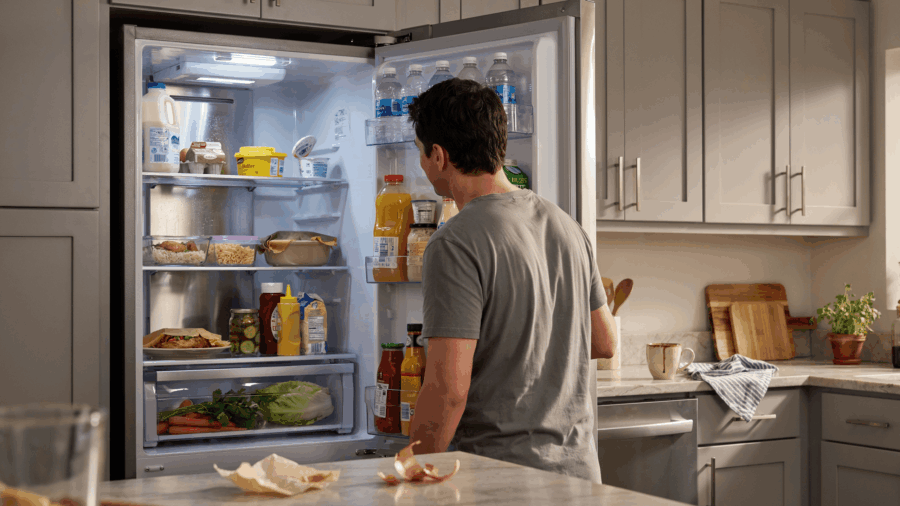
You cook a nice dinner on Sunday. You pack the leftovers into a clean container, snap the lid shut, and slide it into the fridge. By Tuesday night, when you go to reheat it, something’s off. The color’s a little dull. The smell has an edge. You toss it.
That story isn’t a fluke. And it’s usually not your fridge’s fault, either. Your fridge is almost certainly cold enough. The real problem is where inside the fridge you set that container down.
There’s one specific spot in almost every American home fridge that runs warmer than the rest, sometimes by as much as 10°F (about 5.5°C). It’s the spot most people reach for first without thinking. And food stored there spoils on a completely different timeline than the same food sitting a few inches away.
Your fridge isn’t one temperature. It’s a bunch of tiny climates.
Most of us picture the fridge as one big cold box. Open the door, everything inside sits at the same 38°F (about 3°C).
That’s not how it actually works.
The U.S. Department of Agriculture’s Food Safety and Inspection Service says the whole fridge should sit at or below 40°F (4°C), the safe number for slowing bacteria on perishable food (1). But that’s an overall target. It doesn’t mean every shelf hits that reading at every moment of the day.
Cold air gets pumped in through a vent at the back. Cold air sinks. Warm air rises. And every time somebody opens the fridge, warm kitchen air (usually 68°F to 78°F, or about 20°C to 26°C, in most American homes) rushes in and mixes with the cold air inside.
So different spots inside your fridge behave differently. Consumer Reports points out that the middle and lower shelves tend to run coldest (2). And reporting from House Digest, based on appliance industry testing, found the gap between the coldest and warmest spots inside a single fridge can be as much as 10°F (5.5°C) (3).
The U.S. Food and Drug Administration goes further. It tells people to keep the fridge thermometer “near the center of the refrigerator instead of” one specific area, because that area “tends to be warmer than the rest of the fridge because warm air enters every time the door opens” (4).
Read that again. The FDA is straight-up saying there’s a spot in your fridge so warm it’ll throw off any thermometer you put there. And it happens every single time somebody opens the fridge.
Why cooked leftovers get hit the hardest
Not every food handles those temperature swings the same way.
A jar of mustard? Totally fine. It’s got acid, salt, and vinegar working for it. Bacteria don’t stand a chance in mustard.
A container of last night’s chicken and rice? Whole different story.
Cooked food is what food safety folks call a “potentially hazardous food.” That basically means it’s moist, packed with protein, and low in acid, which is exactly what bacteria love. The USDA’s rule is clear: refrigerated leftovers are safe for 3 to 4 days, and that only counts if the food stays at 40°F (4°C) or below the whole time (5).
Here’s where it stings. If your leftovers keep getting hit with warm-air spikes into the 40°F to 45°F (4°C to 7°C) range several times a day, that 3-to-4-day clock doesn’t just slow down. It restarts on a much shorter one. The FDA points out that once you cross 40°F, bacteria can double in as little as 20 minutes (6).
That’s how you end up with chicken that “should’ve been fine until Thursday” going sour on Tuesday. It wasn’t sitting at a steady 38°F. It was riding a roller coaster you couldn’t see, taste, or smell.
So which spot are we talking about?
If you’ve been scanning your fridge as you read this, wondering “okay, which shelf is he talking about?”, this is it.
It’s not the top shelf. Not the crisper. Not the produce drawer. It’s not really a shelf at all.
It’s the door.
The refrigerator door, and every bin built into it, is the warmest and most unstable zone in your entire fridge. It sits farthest from the cold air vent at the back. It’s the first thing warm room air hits every time somebody opens the fridge. And unlike the interior shelves, which stay inside a bubble of cold air, the door has zero protection from those spikes.
Reporting from Reviewed, part of the USA Today network, confirms it plainly: the door is the warmest part of the fridge because “items stored on the door are surrounded by room temperature air, rather than the cold air inside the fridge” every time it opens (9).
And yet the door is exactly where most of us stash the stuff we grab most. Milk. Eggs. Yogurt. Last night’s takeout. The foods that should be sitting deep inside the fridge are living on the warmest shelf in it.
The fix takes 10 seconds and costs nothing
You don’t need to buy a thing. Just swap what lives where.
Do this the next time you open the fridge:
Move all cooked leftovers to a middle or top interior shelf, toward the back, closest to the cold air vent. That’s where the temperature actually stays at or below 40°F (4°C).
Move milk, yogurt, cream, and cheese off the door and onto an interior shelf. Consumer Reports specifically recommends middle or lower shelves for milk and eggs.
Move eggs to their original carton on a middle interior shelf, not the door. The carton protects them and holds the temperature better.
Move raw meat, poultry, and seafood to the bottom interior shelf, toward the back. That’s the coldest zone, and putting raw meat low also keeps drips off the food below.
Now use the door for what actually belongs there: ketchup, mustard, hot sauce, soy sauce, salad dressings, jam, pickles, bottled water, soda, and juice. High-acid or shelf-stable stuff that shrugs off temperature swings.
That’s it. Ten seconds of shuffling, one time.
What actually changes when you do this
You get the full 3-to-4-day USDA safety window back on your leftovers, instead of the shortened, unpredictable one they were running on before. That’s the difference between eating Sunday’s roast chicken for lunch on Wednesday and dumping it on Tuesday because it “smelled a little off.”
You also cut your household’s exposure to the exact conditions that let Salmonella, Listeria, and E. coli multiply. The Centers for Disease Control and Prevention estimates six major foodborne bugs cause about 9.9 million illnesses, 53,300 hospital stays, and 931 deaths in the U.S. every year (7). And the USDA says the average American family of four loses about $1,500 (around €1,380) a year to uneaten food (8), most of it stuff that spoiled before anyone got to it.
Same food. Same fridge. Same grocery bill. A completely different result on Wednesday night.
That container of dinner isn’t spoiling because you did something wrong when you cooked it. It’s spoiling because you put it in the one part of the fridge that was never built to hold it.
Sources: (1) USDA Food Safety and Inspection Service, Refrigeration and Food Safety; (2) Consumer Reports, How to Organize a Refrigerator; (3) House Digest, Fridge Temperature Zones; (4) U.S. Food and Drug Administration, Are You Storing Food Safely; (5) USDA FSIS, Leftovers and Food Safety; (6) U.S. Food and Drug Administration, Refrigerator Thermometers and Food Safety; (7) CDC, Estimates of the Burden of Foodborne Illness in the United States; (8) USDA, Food Loss and Waste; (9) Reviewed (USA Today), How Cold Should Your Refrigerator Be.
The post Stop putting cooked food in this part of your fridge: it’s spoiling days faster than it should appeared first on Trendir.