
This reusable water bottle habit turns every sip into a serious health risk: the 2-minute fix to stop it
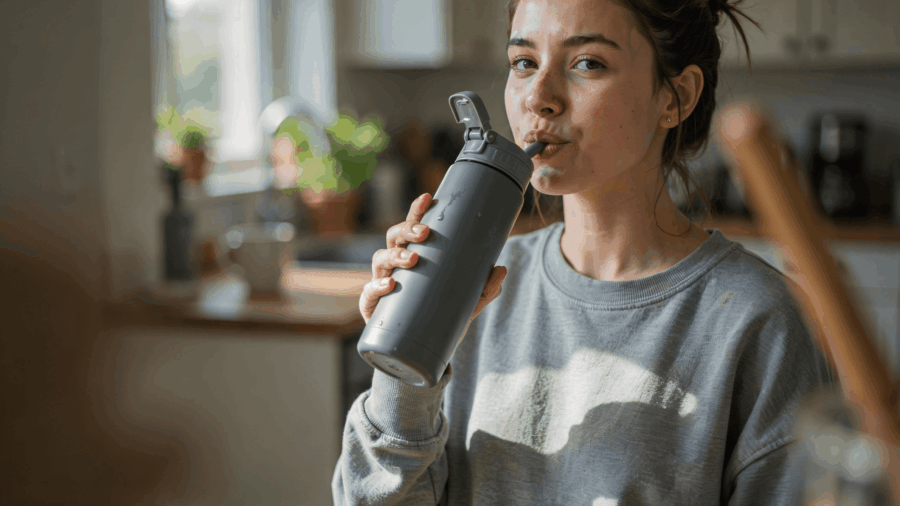
You bought the bottle for the right reasons. Less plastic, more water, one less thing to think about. So you fill it at the sink, sip at your desk, top it off after dinner. Same bottle, all day, every day. It’s just water in there.
That last part is where most of us are quietly wrong.
The bottle looks fine. The water looks fine. But there’s one small, everyday habit almost everyone falls into that slowly turns a reusable bottle into one of the germiest things you own. And you’d never spot it from the outside. No smell yet. No weird taste yet. Just a slow, invisible buildup that infectious disease doctors have been trying to warn people about for years.
Once you see the numbers, it’s hard to unsee them.
Your “clean” bottle is dirtier than the thing your dog drinks from
In late 2022, a team at WaterFilterGuru.com, a Denver-based group of water quality specialists, sent swabs from everyday reusable bottles to a lab. They swabbed the usual suspects too, for comparison: a kitchen sink, a computer mouse, a toilet seat, and a pet’s water bowl.
The results were ugly. Reusable bottles held twice as many germs as the kitchen sink, four times as many as a computer mouse, and 14 times more than a pet bowl. The average bottle came back with about 20.8 million living germs on the swab. Spout-top and screw-top lids were the worst, matching a sink faucet.
Two kinds of bacteria kept turning up. One is the type doctors often link to infections people catch in hospitals, and it’s getting harder to kill with antibiotics. The other type can cause stomach trouble.
A follow-up test by the same group tracked one bottle over a full month. After one day, the bottle had only a small handful of germs. After one week, that number had jumped to about 22 times more bacteria than an airport check-in kiosk. After 30 days, the germ count had grown more than 600,000 times what it started at.
The wrong pattern almost every bottle owner falls into
So what’s really going on? The bottle itself isn’t the villain. The problem is a stack of small daily habits, and almost every daily bottle user does at least three of them without thinking.
Dr. Amy Edwards, a pediatric infectious disease specialist at University Hospitals Rainbow Babies & Children’s, actually gave people a soft out. She told the University Hospitals health blog that skipping a wash for a day or two is usually fine, but only if you’re generally healthy, you don’t share your bottle, you only put water and ice in it, and you empty it and let it dry all the way between uses.
Read that list again. Most of us miss at least one, usually the drying part.
What actually goes wrong, in plain terms:
You top it off without emptying it. The bottle stays wet inside all day. The inside of a reusable water bottle is a dark, damp, warm space, which is exactly what mold and bacteria need to move in and grow.
Your mouth touches the spout. Your mouth is one of the germiest parts of your body, and every sip sends a fresh batch into the bottle, where they clump into a slimy layer called biofilm.
Your hands touch the lid. “People forget that we have bacteria in our mouths and hands,” Cleveland Clinic internal medicine doctor Marianne Sumego told the clinic’s health blog. “Every time we touch and fill our bottles, set them down or take the caps off, we introduce bacteria.”
Germs double fast. Amy Johnston, a food safety specialist at University of Minnesota Extension, told CBS Minnesota that bacteria can double roughly every 20 minutes, and warm spots (a hot car, a sunny desk) speed it up even more.
Put it all together: wet inside + mouth germs + hand germs + warm car or desk + no real cleaning. Do that for a week and you’ve grown a science experiment you’re drinking from. Do it for a month and the slimy film is thick enough that rinsing won’t touch it. Dr. Sumego calls this film “a sign that bacteria and mold are building up.” By the time you can taste something off, it’s been in there a while.
And if you read all that and thought that’s basically me every day, you’re not alone. 88% of Americans say they care deeply about their drinking water quality, but about 13% clean their bottles only a few times a month. Among Gen Z, it’s 16%. We fuss over the water. We ignore the bottle.
The good news is the fix is boring, cheap, and quick. It just has to actually happen.
The 2-minute fix that actually works
Every day, before you refill:
Empty the bottle all the way. Not “mostly.” All the way.
Add a squirt of dish soap and hot water. As hot as your tap runs.
Scrub it with a bottle brush. Dr. Pradip Panta, a microbiology professor at Southeastern Louisiana University, told Reader’s Digest that the brush is the whole game. Scrubbing is the only thing that actually breaks apart the slimy film inside the bottle and on the lid. A basic bottle-and-straw brush set runs about $5 to $10 (roughly 5 to 9 euros).
Rinse and let it dry all the way. Upside down, cap off, on a rack. “Bacteria in the mouth prefer moist environments,” Dr. Edwards said, “so letting your water bottle dry all the way can kill most oral bacteria.”
Once a week, do this instead:
Take the whole thing apart. Dr. Sumego is specific: you can’t skip pulling the silicone ring out of the lid. Leave it stuck in place and water and soap never reach the hidden seam under it, which is exactly where mold likes to hide.
Soak the parts for 15 to 20 minutes in a bowl of equal parts white vinegar and warm water. Cleveland Clinic recommends this vinegar mix to kill mold spores.
Scrub with soap and a brush after the soak.
Let everything air dry all the way before putting it back together.
Two minutes on a normal day. Five minutes of real work on a Sunday. That’s it.
A few things quietly make it worse: don’t put juice, sports drinks, coffee, tea, or anything with sugar or milk in the bottle unless you’ll wash it right after. Dr. Edwards said sugar, fat, and protein feed bacteria and mold and speed the whole thing up. Don’t share your bottle. Don’t leave it sitting in a hot car. And simpler bottles are easier to keep clean than the ones with a bunch of straws and little crevices, so plain beats fancy.
Dr. Edwards, who is literally an infectious disease doctor, wrapped up her interview with something oddly comforting. “I’m an infectious disease doctor, and even mine usually only gets washed three or four times a week,” she said. “But I’m not immune-compromised, I only put water in my bottle, and I don’t share it with anyone else.”
That’s the honest take. Water only, no sharing, dry between uses, and you’ve got wiggle room. Skip all that and refill on autopilot, and your bottle is quietly running the same experiment that Denver lab ran, except the results end up in you.
The bottle isn’t the problem. The habit around it is. A brush, a splash of vinegar once a week, and two minutes at the sink is the difference between a hydration routine that’s actually clean and one that just looks clean.
Sources: (1) WaterFilterGuru.com, “Swabbing Water Bottles: How Clean Is the Water You Drink?”; (2) WaterFilterGuru.com, “How Fast Does Bacteria Grow in a Reusable Water Bottle?”; (3) Cleveland Clinic Health Essentials, “Your Water Bottle May Be Growing Mold: Here’s How To Prevent It”; (4) University Hospitals, “How to Keep Your Water Bottle Clean and Safe”; (5) AARP, “Is Your Reusable Water Bottle Making You Sick?”; (6) CBS Minnesota, “Reusable water bottles have more bacteria on them than dog bowls and toilet seats, study finds”; (7) Fox News, “Reusable water bottles contain more bacteria than toilet seats do, says study”; (8) Reader’s Digest, “How to Clean a Water Bottle the Right Way to Get Rid of Mold and Germs”.
The post This reusable water bottle habit turns every sip into a serious health risk: the 2-minute fix to stop it appeared first on Trendir.